HR system features in 2026 go far beyond storing employee records. The strongest platforms help teams plan smarter, respond faster, and maintain clarity in workforce operations even when demands increase.
That is why HR system features should be judged by a simple question: Does the system help HR teams stay accurate, responsive, and confident in their daily work?
In this article, we will explore the key HR system features that matter most in 2026 and how they support better workforce planning.
Top HR System Features To Look For In 2026
1. Workforce Scheduling That Matches Real Operations
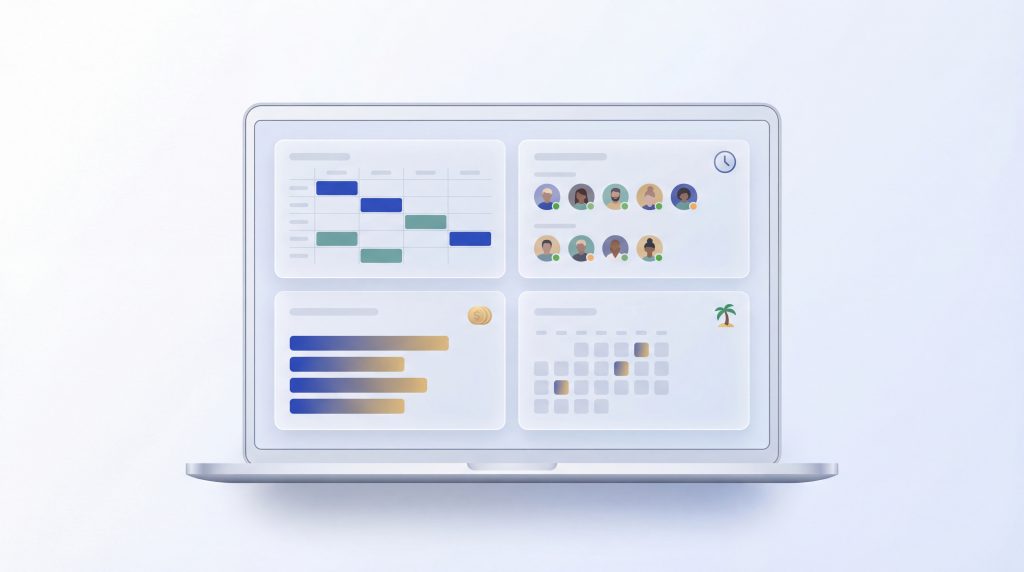
Scheduling is still one of the most important features to look for in any modern HR platform. For shift-based and frontline teams, schedules change frequently, coverage is critical, and manual coordination can lead to avoidable mistakes.
bluworks organizes scheduling as one of its core operational pillars, alongside attendance, payroll, and employee records, because these functions are tightly connected in real life.
This is especially useful in organizations managing blue-collar or frontline teams, where last-minute changes are common. For those workforces, a mobile-first integrated system matters more than ever.
2. Attendance Tracking That Reduces Manual Work
A robust attendance module should provide HR teams with reliable visibility without forcing them to chase spreadsheets.
bluworks highlights attendance as a core function and says its setup can be customized to match business rules. It also points to mobile access, so managers can handle approvals and workforce tasks more easily from anywhere.
For companies comparing employee management software, attendance is one of the clearest tests of quality. If the system cannot help teams track check-ins, late arrivals, absences, and work hours in a clean, efficient way, it will create more work rather than less.
bluworks positions itself around simplifying those operational details so HR can focus on people rather than paperwork.
3. Payroll Connected To Actual Work Data
Payroll is where many HR systems either create confidence or create chaos. In 2026, the best tools will connect payroll to actual attendance, approved leave, and documented rules, so teams are not rekeying data from one system to another.
bluworks explicitly lists payroll as a core pillar and says it automatically links incentives and penalties to payroll. Its blog content also describes payroll automation as being calculated from actual attendance data, overtime, deductions, penalties, and incentives.
That matters because payroll errors affect trust quickly. They also consume time that HR teams could spend on planning rather than correcting. A good HR system should reduce manual reconciliation and give managers a cleaner path from time worked to pay processed.
4. Leave Management With Clear Policies And Easy Approvals
Leave management is one of those features that looks simple until a business scales. Then clarity becomes essential.
bluworks allows organizations to set compliant leave policies, customize additional leave types, track and prorate balances by entitlement, approve requests directly from a phone, and see each employee’s leave history and balance in one place.
That kind of structure is useful for both HR teams and managers. It makes planning easier, reduces back-and-forth, and helps prevent inconsistency.
For companies searching for HR software in Egypt, this is especially relevant because local workforce management often depends on practical policy management, fast approvals, and clean records that align with how teams actually work.
5. Employee Records And Secure Document Storage
A modern HR system should not leave records scattered across inboxes, folders, and spreadsheets.
bluworks lets organizations store all employee documents and information in a single profile, receive alerts for missing or expiring documents, and access files anytime, from anywhere.
This is one of the most practical HR system features to prioritize because records support almost everything else: onboarding, compliance, audit readiness, and employee administration.
6. Incentives And Penalties That Stay Organized
In many organizations, performance-related incentives and penalties are handled in messy, inconsistent ways. That creates confusion for managers and frustration for team members.
bluworks includes a dedicated feature for incentives and penalties, with custom bylaws, automated filing and approval, detailed employee history, and automatic payroll integration.
This matters because compensation decisions should be traceable. When a system connects policy, approval, and payroll in a single flow, HR gains visibility, and the business gains consistency. That is a much stronger foundation than managing those rules manually in separate files.
7. Fast Setup And Simple Daily Use
A powerful system is not enough if teams cannot adopt it quickly.
bluworks helps companies set up HR rules, onboard managers and employees, create profiles, upload documents, and assign roles. It also states that organizations can move from setup to managing scheduling, attendance, payroll, and employee records in an organized, automated way.
That is important because adoption is where many HR platforms lose momentum. bluworks’s own content argues that prioritizing operational pillars instead of feature bloat reduces complexity and keeps ROI visible earlier. For buyers in 2026, that is a meaningful signal: the best platform is not the one with the longest list of features, but the one people actually use.
8. Tools That Support Strategic Workforce Planning
The strongest HR systems should help HR move from administration to planning.
Workforce planning is about assessing current capabilities, determining future needs, and bridging gaps. It also says modern planning should account for automation, distributed work models, reskilling, and collaboration between humans and AI.
That is where data visibility becomes critical. If HR can see attendance patterns, leave balances, payroll drivers, and employee records in one place, it becomes easier to make workforce decisions with confidence.
9. Built For Frontline And Blue-Collar Teams
Not every HR system is built for the same kind of workforce. If your teams work shifts, move across sites, or depend on quick approvals, you need tools that reflect that reality.
bluworks repeatedly positions itself as a frontline and blue-collar workforce management solution, with mobile-first access, scheduling, attendance, leave, payroll, employee records, and document storage as core modules.
That focus matters because workforce models are becoming more fragmented. Employers are increasingly using blended and flexible workforce arrangements, and leaders must make intentional policy choices to keep communication clear and operations stable.
A system built for real operational conditions gives HR a better chance to stay ahead of that complexity.
How To Evaluate The Right HR Platform In 2026
When comparing options, start with the basics.
- Does the system handle scheduling, attendance, payroll, leave, and records without forcing extra manual steps?
- Can managers approve work from mobile?
- Can HR see the full picture in one place?
- Does it reflect the realities of your workforce rather than assuming everyone works the same way?
Those questions matter more than flashy promises.
A good HR platform should make teams feel capable, not overloaded. It should reduce the friction between policy and practice. It should help leaders act on data instead of reacting to problems after they grow.
That is the standard to use when evaluating employee management software in 2026.
Final Thoughts
The best HR systems in 2026 will be the ones that simplify the work HR already does every day: scheduling, attendance, payroll, leave, records, and approvals. They will also help companies think more strategically about workforce planning, not just administration.
For businesses that want a practical, clear, and workforce-focused platform, bluworks brings those essentials together in a way that supports real operations and real decision-making. That is what makes the right HR system useful, reliable, and worth the investment.
Frequently Asked Questions
What Are The Most Important HR System Features In 2026?
Scheduling, attendance, payroll, leave management, employee records, and document storage are among the most important features because they affect daily execution and planning.
Why Does Mobile Access Matter In HR Software?
Mobile access speeds up approvals and workforce management, especially for managers managing active or frontline teams. bluworks highlights mobile notifications and approvals in its leave and onboarding flows.
What Should Companies Look For In HR Software Egypt?
Look for local practicality: clean payroll handling, compliant leave policies, document control, and tools that work for real operational teams. bluworks positions these as core parts of its platform.
Why Is Strategic Workforce Planning Important?
Because it helps HR connect today’s workforce reality with tomorrow’s business needs. SHRM defines it as assessing current capabilities, forecasting future needs, and closing gaps.