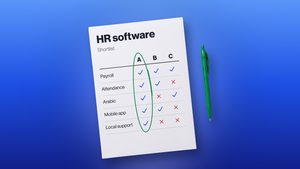
HR Software for Small Businesses is easier to find than ever, but for Egyptian companies, finding a system that genuinely fits local business requirements is a different challenge altogether.
Many of the most popular HR platforms were developed for businesses in the US, UK, or Western Europe. While they often offer robust feature sets, they are built around assumptions about payroll, compliance, and workforce management that do not always align with the realities of operating in Egypt.
Social insurance requirements follow different processes. Leave policies must comply with Egyptian labor law. Payroll calculations frequently involve allowances, variable earnings, and other local considerations that many international systems struggle to handle efficiently.
This comparison is designed for small businesses in Egypt, typically with 20 to 150 employees, that are looking to replace spreadsheets and manual processes with a system that supports their day-to-day operations.
The evaluation focuses on the factors that matter most in this environment: payroll accuracy, compliance with Egyptian labor regulations, ease of implementation, and whether the platform can be managed effectively without a dedicated IT team.
What Small Businesses in Egypt Actually Need from HR Software

Before comparing products, it is worth being specific about the requirements. A 40-person business does not have the same needs as a 400-person business, and a lot of HR software evaluation goes wrong because businesses apply enterprise criteria to a small business problem.
The core requirements for most small Egyptian businesses are: payroll that handles Egyptian salary structures including allowances, overtime, and social insurance deductions correctly; leave management that reflects Egyptian labor law entitlements and tracks balances accurately; attendance tracking that does not require significant manual reconciliation; employee record management that keeps contracts, documents, and history in one accessible place; and enough reporting to answer basic HR questions without requiring a data analyst.
On top of those core requirements, a few things become important specifically for the Egyptian context. Arabic language support, or at minimum Arabic-speaking customer support.
Pricing that makes sense for small headcounts without per-user fees that scale uncomfortably. And a vendor that understands what Egyptian labor law requires rather than one that offers a generic compliance module built for a different market.
If you are still figuring out what the scope of your HR function should be before choosing software, the piece on Key HR Functions in Growing Companies gives a clear picture of what HR needs to cover as a business scales.
The Main Categories of Options
International HR platforms with local adaptations include products like Odoo HR and SAP SuccessFactors, which have been configured for Egyptian payroll in various ways. The advantage is feature depth.
The disadvantage is complexity and cost that often significantly exceeds what a small business needs. Implementation typically requires a local partner, which adds time and expense, and the support experience for a 50-person business is rarely prioritized alongside large enterprise clients.
Regional platforms built for the MENA market include options like Bayzat and ZenHR, which were designed with GCC and regional markets in mind and have Egyptian payroll functionality.
These are a step closer to the local context than international platforms, though they vary in how deeply they address Egyptian-specific requirements versus a generalized regional approach.
Egypt-focused platforms include bluworks, which was built specifically for Egyptian businesses managing local workforces.
When it comes to accurately paying employees, managing social insurance, or obtaining needed assistance when there’s a question about compliance, having a system designed specifically for the small business context versus one that is adapted to that context can greatly reduce errors when HR functions are being performed by only 1 or 2 people who are not trained HR professionals.
Top Picks for HR Software for Small Businesses in Egypt
bluworks: Built for the Egyptian Context
bluworks covers payroll, attendance, leave management, and employee records in a single system that was designed around Egyptian employment law and payroll structures from the ground up rather than configured from an international base.
For small businesses, the relevant strengths are: payroll that handles Egyptian social insurance, allowances, and overtime correctly without manual workarounds; leave management aligned with Egyptian legal entitlements; mobile-first attendance tracking that works for both office and field teams; and an implementation process that does not require a dedicated IT resource or a lengthy consulting engagement.
The pricing model is built for the size of businesses that use it, which matters when you are comparing against enterprise platforms that charge per-user fees that become significant at even 50 or 60 headcount.
Check out this bluworks Review for a detailed breakdown of what the platform offers, what it costs, and where it fits best, which is a more useful read than the marketing summary.
Odoo HR: Feature-Rich but Complex
Odoo is an open-source business platform that includes an HR module, and it has a reasonably active Egyptian implementation partner ecosystem. For businesses that are already using Odoo for accounting or operations, adding the HR module is a natural extension.
The challenge for small businesses is that Odoo’s strength is also its weakness: it is highly customizable, which means it can be configured to handle Egyptian payroll correctly, but that configuration requires someone who knows what they are doing.
Out of the box, it is not set up for Egypt. You are paying for potential that someone needs to actualize, and the cost of getting that right varies considerably depending on which implementation partner you use.
For a small business without technical resources, the ongoing maintenance question is also real. When something breaks or needs to change, you are dependent on the same partner, which creates a reliance that some businesses are comfortable with and others are not.
ZenHR: Regional Focus with Egyptian Support
ZenHR is a Jordan-based HR platform that has expanded across the MENA region, including Egypt. It covers the standard HR functions and has Egyptian payroll support, and the interface is clean and reasonably intuitive. Arabic language support is solid.
The main limitation for Egyptian small businesses is that ZenHR’s Egyptian payroll module, while functional, was not the company’s primary market focus. Support for edge cases in Egyptian labor law, specific social insurance scenarios, or Egyptian-specific compliance questions is less deep than you would get from a platform built specifically for Egypt.
For businesses with relatively straightforward payroll, this may not matter. For businesses with more complex structures or that operate in sectors with specific regulatory requirements, it can.
Pricing is positioned in the mid-market, which can be reasonable for businesses above 50 people and starts to look less competitive for smaller teams.
Bayzat: Strong for Benefits, Less Strong for Egyptian Compliance
Bayzat was built primarily for the UAE market and has significant strength in benefits management and health insurance integration, which reflects the priorities of that market. It has expanded into Egypt, but the product’s Egyptian compliance depth is thinner than its GCC offering.
For Egyptian small businesses whose primary need is payroll accuracy and labor law compliance rather than benefits administration, Bayzat is not the most natural fit. It is worth considering for businesses with a significant presence in the UAE or Gulf alongside their Egyptian operations, where having a single platform across markets is worth the tradeoff on Egyptian-specific depth.
How to Approach the Evaluation
Test payroll accuracy specifically. Give any system you are seriously evaluating a realistic payroll scenario for your business: your salary structures, your allowances, your social insurance calculations. See if it produces the right number without manual intervention. This is the single most important test, and it is worth spending time on.
Ask about the implementation timeline and what is required from your side. A system that takes three months to implement and requires significant internal project management is a different commitment than one that can be live in two to three weeks. For a small business without dedicated HR or IT resources, this distinction matters a lot.
Find out specifically how Egyptian labor law compliance is maintained as the law changes. This question separates vendors that have genuinely built for this market from those that have adapted a generic product. The answer should not require a long pause.
The piece on What You Need to Know Before You Choose HR Software covers the full evaluation framework and is worth reading alongside any shortlist comparison you are doing.
Conclusion
For small businesses in Egypt, the HR software decision comes down to whether you want a feature-rich international platform that requires significant configuration to work correctly in your context, a regional platform with decent Egyptian support but limited local depth, or a platform built specifically for the Egyptian market.
The right choice depends on your specific complexity, your headcount, your existing systems, and whether you have internal resources to manage implementation. For most small Egyptian businesses that want something operational quickly and correctly, a platform built for their context is the most practical starting point.
bluworks was built for businesses in Egypt managing local teams. Learn more at bluworks.io/.
Frequently Asked Questions
Do international HR platforms work for Egyptian payroll?
They can, with significant configuration. Most were not built for Egyptian social insurance or labor law defaults, so they require local implementation expertise to get right. The risk is paying for a configuration that should have been included.
What is the most important feature to test before buying HR software?
Payroll accuracy for your specific structure. Give the system a realistic scenario with your salary components, allowances, and deductions. If it cannot produce the right number without manual adjustment, that tells you what you need to know.
How much should a small business in Egypt expect to pay for HR software?
This varies widely. Per-user pricing models can range from a few hundred to several thousand Egyptian pounds per month depending on headcount and features. Ask for the total cost including implementation, not just the monthly subscription fee.