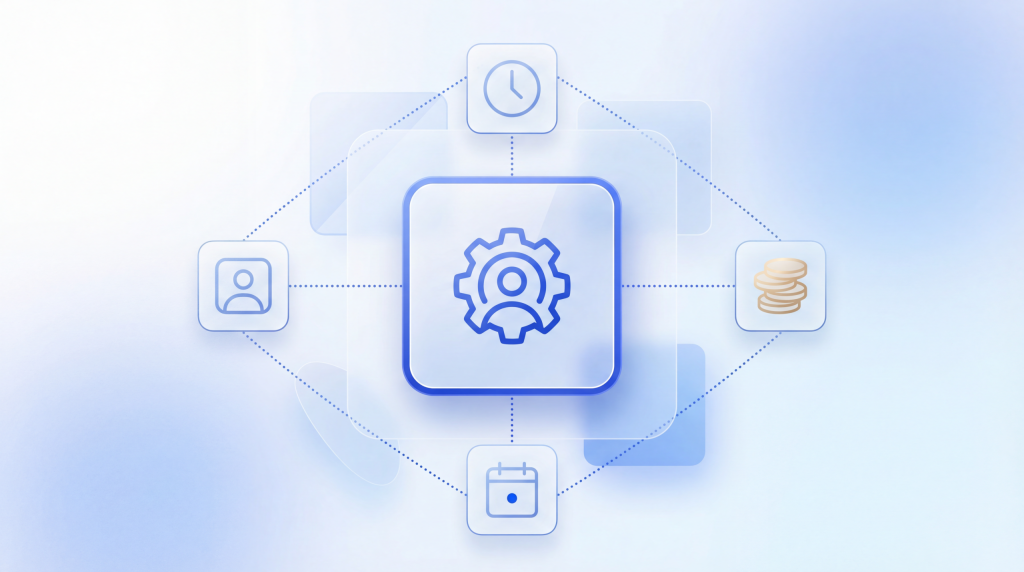
HR system components are essential for modern organizations facing the complex challenge of managing their workforce.
A well-designed human resources management system allows businesses to organize employee information, streamline processes, and support strategic decision-making. Any organization aiming to enhance operational performance and boost workplace productivity must understand the core elements that make up an HR system.
This article explores the essential HR system components, highlighting the key features of today’s HR platforms and showing how each element contributes to more effective human resource management across the organization.
What is a Human Resources Management System (HRMS)?
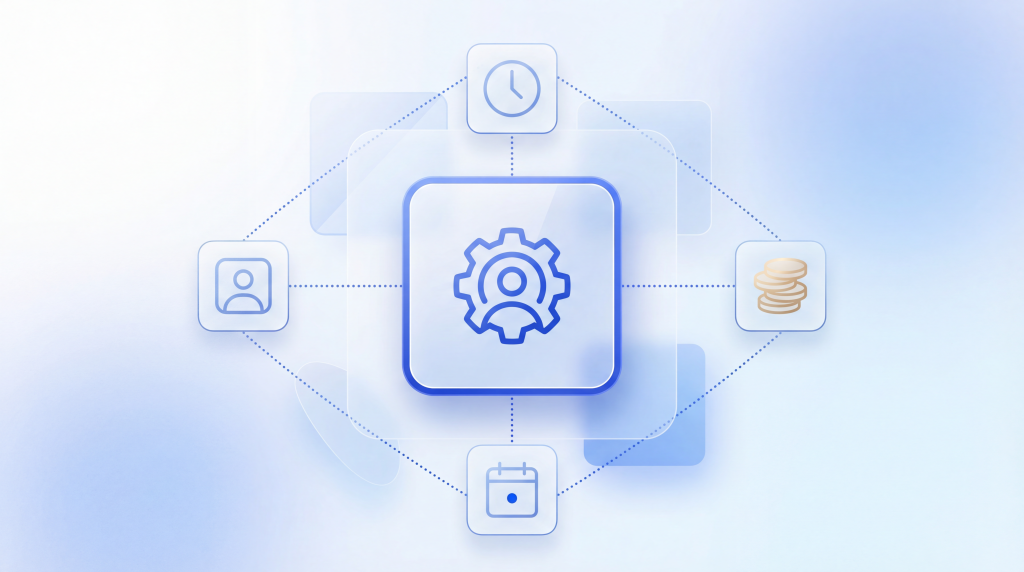
A human resource management system (HRMS) is generally a software-based solution for automating the core human resources processes of an organization. It consolidates information about employees, performance and attendance tracking, payroll and benefits management, training, and development.
These systems act as a central hub for all employee data, reducing paperwork and errors while giving HR teams the tools they need to manage the workforce efficiently.
Modern HRMS solutions offer cloud access, mobile support, and integration with other business systems, turning HR from a mainly administrative role into a strategic partner for organizational success.
Core HR System Components
1. Employee Database Maintenance
The Employee Database is the core of any HR system. It holds a large volume of employee data that includes personal information, contact details, employment history, and organizational position. It serves as a central hub that guarantees the accuracy and accessibility of data.
The database feature ensures the human resources team can easily access information whenever needed. Organized data saves time in updating records, making reports, and responding to various inquiries from employees, thus improving efficiency and accuracy. The system retains historical data for compliance purposes, as well as for strategic plans.
Security features protect sensitive information about employees from unauthorized access. Role-based permissions ensure that only certain individuals can access particular types of data and also provide the ability to make changes.
This is one very important avenue for building trust and confidence in your employees, as well as for meeting legal requirements.
2. Recruitment and Applicant Tracking
Recruitment modules ease the process of attracting and hiring talent. Components of a recruitment module include posting job openings, tracking applications, scheduling interviews, and communicating with candidates. This creates a structured process whereby hiring is done in a manner to further enhance the candidate experience.
System-supported application tracking capability allows the human resource teams to deal efficiently with large volumes. Automated resume screening on predefined parameters, grading of candidates, and detailed records of all interactions are maintained by the system.
This reduces the administrative time spent by recruiters and creates an opportunity to focus on finding the best available talent.
Integrations with job boards and social media expand your reach even further. It can post an opening to multiple channels at once and keep track of which source provides better candidates. This data-driven approach optimizes your recruitment strategy over time.
3. Payroll and Compensation Management
Payroll components handle the complicated calculation of wages, withholding taxes, and paying employees the right amount. These systems guarantee the right compensation while keeping consideration for tax laws and labor laws. Automatic calculations reduce the likelihood of errors occurring in manual processing.
The system also handles various compensations: base salaries, overtime, bonuses, and other deductions. It is designed to generate pay stubs and keep records of previous payments, reporting for accounting and compliance needs. This system interfaces with banking systems for direct deposit and other forms of payment.
Compensation management features support strategic decisions related to pay structures and benefits packages. Analytics provided through the system are valuable in supporting an organization to maintain competitive compensation levels, as well as ensuring internal equity.
These valuable insights are key enablers for retention strategies and budget planning.
4. Time and Attendance Tracking
Time tracking components monitor when employees are working, on break, or on leave. This contributes directly to payroll calculations and provides management with workforce availability. A modern system will allow for time capture via multiple avenues: biometric devices, mobile applications, and web-based clock-in options.
The attendance management system goes beyond mere timekeeping. It allows tracking of different kinds of absences for sick days, vacation, and other types of leave. Managers are able to view team schedules, approve time-off requests, and find patterns of attendance that may need attention.
Real-time data from these components enables better workforce planning, enabling the management to identify who is available and schedule shifts in response to staffing needs.
This visibility supports operational efficiency and ensures appropriate staffing levels.
5. Performance Management
The elements of performance management give ways in which human resources can be evaluated and developed. These can also be used in goal setting to track progress, to review, and to record feedback. A systematic performance appraisal system will foster growth in the individual and the organization.
The system allows for a culture of continuous feedback, not just annual reviews of work. Managers and employees can log achievements, challenges, and development needs throughout the year. This continuous dialogue develops a truer picture of performance and allows timely interventions where needed.
Analytics around performance data provide insight into the trends that help drive organizations. HR can identify the high performers, spot the gaps in needed skills, and measure effectiveness in development programs.
These in turn provide insight for succession planning, training priorities, and strategic workforce decisions.
6. Learning and Development
The training and development modules encourage employee growth with structured learning programs. Such modules manage course catalogs, track enrollments, deliver content, and monitor completion. Investing in employee development improves skills, enhances engagement, and empowers career development.
It can deliver a range of training, from e-learning courses to instructor-led training and blended learning. It keeps track of individual learning paths and ensures that employees undergo all necessary certification and compliance training. Automated reminders keep the completion rate high.
Reporting capabilities show which training programs work best. Since organizations can measure knowledge retention, monitor skill development, and calculate training initiatives’ return on investment, it helps them refine learning strategies in light of the constantly changing business needs.
7. Benefits Administration
The components of benefits management will simplify the administration of health insurance, retirement plans, and all other employee benefits. These systems manage enrollment processes, track eligibility, and record detailed benefit elections. Automated workflows minimize the administrative load when open enrollments occur.
Employees will log into the self-service portal to see options, make selections, and update dependent information. Benefits are clearly presented to show employees their total compensation package. The reports generated will support benefits compliance and make communicating with the insurance providers much easier.
The integration with payroll allows for the proper deduction of employee contributions. It keeps a record of expenditure that aids HR teams in the analysis of benefits utilization.
These insights help in making decisions on plan design and vendor selection by balancing the needs of employees with the organizational budgets.
8. Compliance and Reporting
Compliance components work to help an organization be in a state of compliance with legislation and industry regulations. The system retains record-keeping required by different agencies, generates mandatory reports, and tracks policy acknowledgments. This keeps the company safe from penalties and legal challenges.
There is a tremendous saving of time in automated reporting as compared to manual compilation. The generation of reports may be on demand or at periodic intervals. Standard reports meet the most frequent requirements, while custom reporting deals with unique organizational needs.
Audit trails of all system activities are recorded, such as the additions and changes made in the employee’s records. This will allow openness for internal controls and audit proofs, or investigations.
9. Employee Self-Service
The self-service portals allow the staff to independently manage their personal information and needs. They use the interface for updating personal information, checking pay stubs, requesting time off, and exploring company policy. The provision for them to have this autonomy reduces the workload for HR while providing the employees with immediate access to information that they might need.
The self-service element enhances employee satisfaction through 24/7 access to HR functionality. Employees like the ease this provides, and they do not have to wait for the HR department’s support for routine matters. This is more accessible and important in organizations that have remote or dispersed employees.
Mobile-enabled self-service options satisfy the expectations of the connected workplace of today, where checking schedules, submitting requests, and viewing notifications are done via smartphones.
This kind of flexibility supports the concept of work-life balance and keeps people connected no matter where they are.
10. Analytics and Reporting
HR analytics turn data into usable information for organizations to analyze their current state and anticipate future requirements within their workforces. Since HR-related decisions are based on data-driven practices, the benefits of HR analytics can be seen in all areas of human resources. Analytics allows leaders of HR to effectively use the data gathered through various sources to create and implement a comprehensive strategy for their organisation.
The use of dashboards is one method through which leaders can quickly view essential metrics via graphical representations of key performance indicators (KPIs) such as turnover rate, hiring timeframes, and training capacities. Through the use of these graphical representations, HR leaders can determine where improvements are necessary within their departments and determine which areas require immediate attention.
Predictive analytics forecasts future scenarios based on historical data. For example, it enables an organization to forecast its needs in human resources, foresee flight risks among key talents, and model what would happen if policy changed.
This capability works toward proactive, not reactive, management.
How an HR System Integrates Seamlessly with Other Tools
Modern HR systems connect with other tools in the organization to keep information flowing smoothly. This includes accounting software, ERP systems, and communication platforms, helping avoid duplicate data and maintain consistency.
For instance, if employee information changes within the HR system, that information can then flow directly into payroll, benefits providers, and access control systems. Such synchronization greatly reduces errors and improves efficiency throughout the organization. API-based integrations also enable organizations to create customized integrations for specific business needs.
This flexibility allows the company to build an integrated technology ecosystem that enables unique processes and workflows.
Benefits of Integrated HR Systems
An integrated HR system brings all HR functions together in one platform, making processes smoother and more efficient. It not only handles routine tasks but also supports better decision-making and enhances the overall employee experience. Key benefits include:
- Reduces errors and ensures consistent employee data across all systems.
- Improves data quality, helping managers make better decisions.
- Automates routine tasks, freeing HR to focus on strategic work.
- Supports activities like talent development, culture building, and planning.
- Enhances the employee experience with smoother, more transparent processes.
- Increases overall employee satisfaction and engagement.
Choosing the Right Components of an HR System
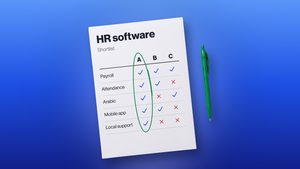
Not every organization needs all HR system components. Smaller businesses may only need basic employee records and payroll, while larger companies often require a full solution covering all HR functions.
Another important point in the system’s selection is scalability. The platform selected should grow with the company and allow for added complexity. Usually, a cloud-based solution is more scalable than an on-premise installation.
User experience has very specific consequences on the rates of adoption and system effectiveness. An intuitive interface reduces training time, which in turn makes self-service easy for employees to accept.
What’s more, an organization should view systems through the eyes of employees and HR staff to ensure that usability lives up to expectations.
Best Practices in Implementation
Successful implementation requires careful planning and clear communication. Organizations must clearly define objectives, map current processes, and show how the new system will improve their operations.
Involvement of stakeholders across the organization ensures diverse needs are met. This is an important step, and this opportunity should not be missed. Cleansing and arranging the actual employee information before migration saves trouble in the new system.
The various categories of HR administrators, managers, and employees may require different training.
Conclusion
Knowing the key HR system components is essential for creating an effective human resources management system. Each component supports workforce management, from employee data to analytics, helping the organization run smoothly.
Using a platform like Bluworks brings all these elements together, making operations more efficient, improving decision-making, and enhancing the employee experience. Experience the benefits firsthand by requesting a demo today and see how it can transform your HR processes.
Frequently Asked Questions
What are the essential components of an HR system?
Key components include employee data management, payroll, time and attendance tracking, performance management, benefits, and recruitment tools. These cover the main HR tasks every organization needs.
How does an HR system improve efficiency and decision-making?
It automates routine tasks, reduces paperwork, and keeps all employee data in one place. This saves time and provides insights for better, faster decisions.
How do HR analytics support strategic planning?
HR analytics turn employee data into insights on trends, performance, and future needs. They help identify skill gaps, predict turnover, and guide HR strategies that match business goals.