

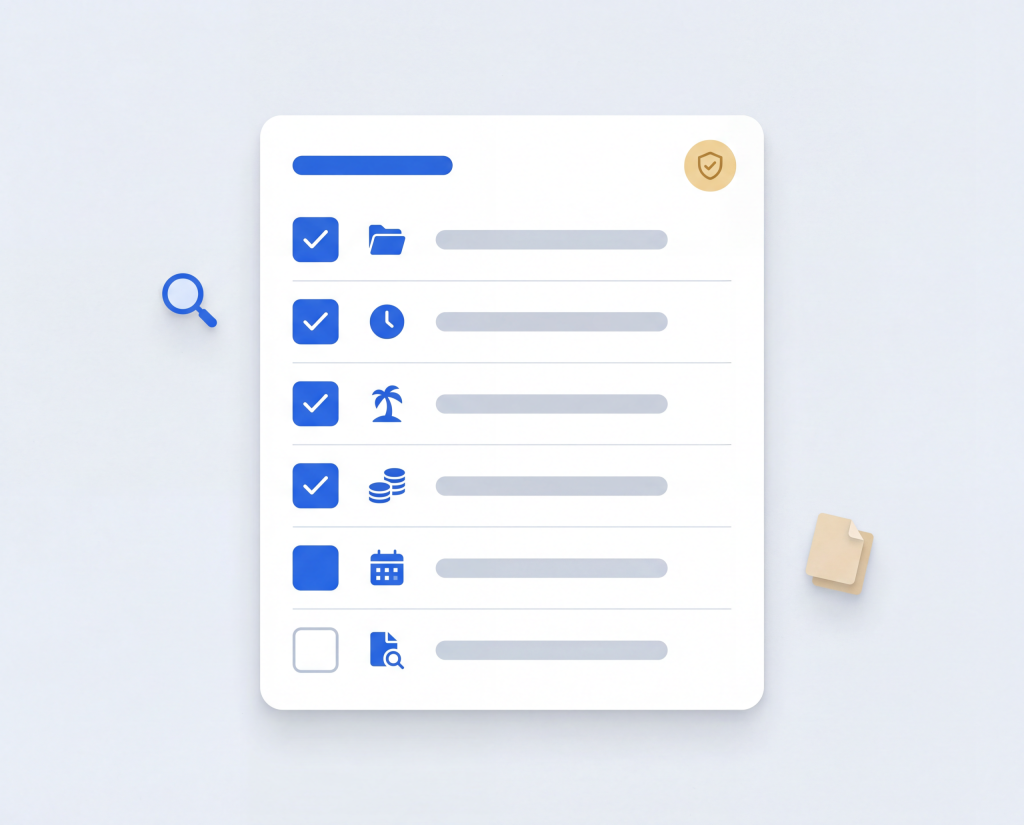
An HR audit checklist is not just a paperwork exercise. It is a practical tool for reviewing how your HR function actually operates, from daily processes and employee records to approvals, policies, and compliance requirements. A strong audit does more than confirm that documents exist. It helps identify gaps, spot inconsistencies, and highlight where HR processes no longer match how the business really works.
Done properly, an HR audit gives teams a clearer view of what is working, what is outdated, and what needs attention before small issues become larger compliance risks. It is one of the simplest ways to strengthen internal processes, improve consistency, and keep HR aligned with both legal requirements and operational needs.
In this article, we will break down what an HR audit checklist should include, how to review your HR processes step by step, and how to spot compliance risks before they become larger operational problems.
What A Good HR Audit Should Reveal
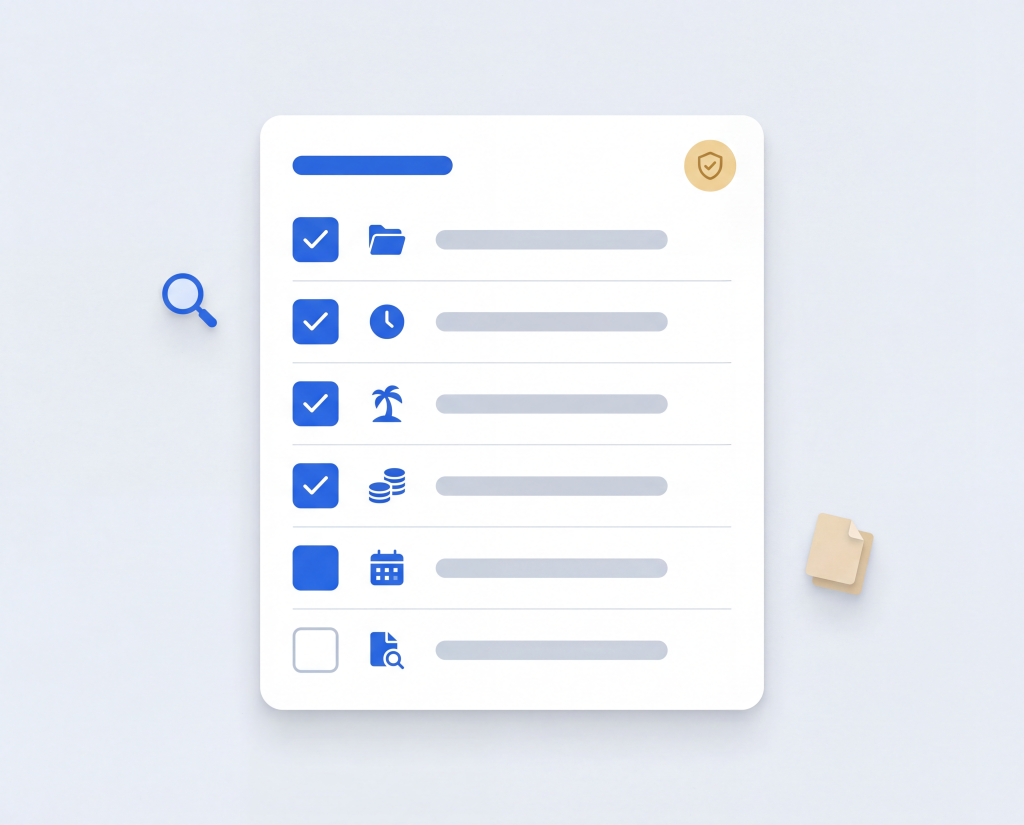
A useful audit should show whether your HR process is dependable under pressure.
Can you find records quickly? Are attendance logs accurate? Do leave balances match policy? Are approvals traceable? Do your documents expire silently, or do you get alerted in time? If the answer is unclear, the problem is usually not one single policy. It is the gap between policy and execution.
That is why an audit should examine the full workflow, not just one file folder or spreadsheet.
HR Audit Checklist
1. Review Employee Records And Retention
Start by checking whether employee files are complete, current, and stored in one place. In a real audit, that means reviewing hiring records, job history, approvals, and any documents you must retain under company policy or law.
OSHA’s recordkeeping rule also underscores why this matters: covered employers must keep injury and illness records, and SHRM’s retention guidance reminds employers that recordkeeping timelines can vary by record type and state.
Look for missing files, duplicate versions, and documents that live in too many places. If a record takes too long to find, it is not really audit-ready.
2. Check Attendance Tracking For Accuracy
Attendance is one of the easiest places for small errors to become bigger compliance issues. Review how check-ins and check-outs are recorded, whether late arrivals and early exits are handled consistently, and whether overtime is calculated the same way every time.
With Bluworks, employees can clock in and out from their phones using geo-fencing, while managers can view attendance by day, location, or employee and set rules for absences, late arrivals, and early departures.
That kind of review helps you spot patterns early. If one site has repeated clock-in issues, the audit should tell you whether the problem is policy, behavior, or process design.
3. Reconcile Leave Policies And Leave Balances
Leave mistakes often happen when policy, approvals, and balances are not aligned.
Check whether your leave rules are written clearly, whether employees can see the right balance, and whether approvals are recorded in a way that can be traced later. It can set compliant leave policies, customize additional leave types, track and prorate leave balances, and let managers approve requests directly from a phone.
A strong audit should also ask a simple question: Can someone explain a leave decision after the fact? If the answer is no, you probably have a visibility problem, not just a policy problem.
4. Verify Payroll-Linked Incentives And Penalties
If your company uses incentives or penalties, audit the logic behind them.
Are the rules documented? Are the approvals consistent? Are the calculations tied correctly to payroll? Organizations can upload customized penalty bylaws and performance-based incentives, automate penalty filing and approval, and link performance-based incentives directly to payroll.
This is important because payroll errors rarely stay isolated. When pay, penalties, or incentives are not handled consistently, trust erodes fast. A good audit should confirm that each adjustment can be explained, reviewed, and traced.
5. Test Schedule Changes And Communication
A schedule is only useful if people actually receive the update.
Review how shift changes are created, approved, and communicated. Check whether employees are notified on time and whether managers can make fast adjustments without losing visibility.
With Bluworks, managers can assign shifts and locations, notify employees instantly of schedule changes, and update shifts through the mobile app or web dashboard.
This is one of the most practical parts of a process audit. If schedules are correct but notifications are late, the issue is not planning. It is execution.
6. Review Document Storage And Expiration Tracking
A serious HR audit should include document control. Check whether employee documents are stored securely, whether each person has one complete profile, and whether you receive alerts when a document is missing or expiring.
According to Bluworks, it stores employee documents safely online, keeps all documents and information in one profile, and sends alerts for missing or expiring documents.
That kind of control matters because document problems are often invisible until they become urgent. A clean system makes it easier to stay ready without chasing files at the last minute.
7. Confirm Local Rules And Internal Policies Match The Process
A process can look efficient and still be out of step with the rules it is supposed to follow. Review whether your HR process reflects internal policy, labor requirements, and your company’s actual operating model.
Bluworks is built to follow internal policies as well as local laws, regulations, and cultural practices, and it supports compliance without extra effort.
This is where many audits become useful. You are not just checking whether a rule exists. You are checking whether the workflow makes it easy to follow the rule every day.
8. Check Whether Managers Have Real Visibility
An audit should also reveal whether decision-makers can actually see what is happening.
Can HR and operations review attendance patterns? Can they monitor labor costs by location? Can they spot gaps before they become problems? It gives HR, operations, and business owners shared visibility into attendance patterns, labor costs, and operational gaps in real time.
That visibility is valuable because many compliance issues start as small inconsistencies. If the data is scattered, the warning signs are easy to miss.
9. Turn Findings Into One Clear Action Plan
The best audits do not end with a long list of issues. They end with ownership. For each gap, assign three things: who fixes it, what changes, and by when.
Keep the action list short enough that it actually gets used. A clean audit process should leave your team more confident, not more overwhelmed.
What A Strong Audit Looks Like In Practice
A well-run audit makes the business feel more controlled, not more complicated. You should be able to see where records live, how attendance is captured, how leave is approved, how payroll-linked adjustments are handled, and who owns each step.
That is exactly the kind of operational clarity companies need when compliance expectations keep moving, and internal teams need to stay calm, fast, and accurate.
It also gives HR a stronger position in the business conversation. Instead of reacting to errors, your team can show where the process is stable, where the gaps are, and what needs to change next.
Conclusion
A good HR audit is not about proving that everything is perfect. It is about proving that your processes are clear, consistent, and ready when someone asks for proof.
Bluworks brings scheduling, attendance, leave, payroll-linked incentives and penalties, document storage, and onboarding support into one system, which makes that kind of review much easier to manage.
For organizations that want to stay compliant without adding more confusion, Bluworks offers a practical way to keep HR organized, visible, and human.
Frequently Asked Questions
How Often Should An HR Audit Be Done?
At a minimum, review your HR processes once a year. If your business has frequent schedule changes, a growing headcount, or more than one site, a quarterly review is often more practical.
What Is The Difference Between An HR Compliance Audit And An HR Process Audit?
An HR compliance audit checks whether you meet legal and policy requirements. An HR process audit examines how work actually flows through the system, including approvals, records, and handoffs.
What Should Be Included In An HR Audit Checklist?
Include employee records, attendance, leave, payroll-linked changes, document storage, schedule updates, and policy alignment. Those are the areas where HR mistakes usually show up first.