

Handle employee grievances effectively, and many workplace issues can be resolved long before they become formal disputes. Fail to address them properly, and small concerns can gradually escalate into complaints, investigations, and legal risks.
Most labor complaints filed with Egyptian authorities do not begin as major legal conflicts. They often start with everyday workplace issues. A manager handles a situation poorly. A payroll discrepancy goes unexplained. A policy is applied differently to two employees in similar circumstances. An employee raises a concern, receives no response, follows up again, and eventually concludes that escalating the matter externally is the only remaining option.
In most cases, the transition from an internal complaint to a formal labor dispute is not sudden. It is the result of multiple missed opportunities to listen, investigate, and resolve an issue before it grows into something larger.
Understanding how that escalation happens is the first step toward building a grievance management process that employees trust and use, rather than a formal procedure that exists on paper but fails to resolve problems in practice.
Why Most Grievance Processes Do Not Work
A grievance procedure exists in most organizations that have bothered to write an HR policy manual. Very few of them function the way they are supposed to. The reasons are predictable.
The process requires employees to raise complaints formally in writing, which most employees are not willing to do when the issue involves their direct manager or when they are worried about being seen as a troublemaker. So the formal process sits unused while the actual complaints travel through informal channels or stay silent entirely.
When complaints are raised, the response time is often too slow. An employee who raises something serious and waits three weeks for acknowledgment draws a clear conclusion: this organization does not take this seriously. At that point the internal process has effectively failed even if it has not technically concluded.
The person responsible for investigating the grievance is sometimes the person the grievance is about, or someone with a close working relationship to them. That is not a process. That is a simulation of one.
And then there is the follow-through problem. Even when a grievance is handled and a decision is reached, if nothing visibly changes as a result, the employee has no reason to believe the process produced anything real. Future employees with complaints observe this and decide the internal route is not worth taking.
How to Handle Employee Grievances Properly
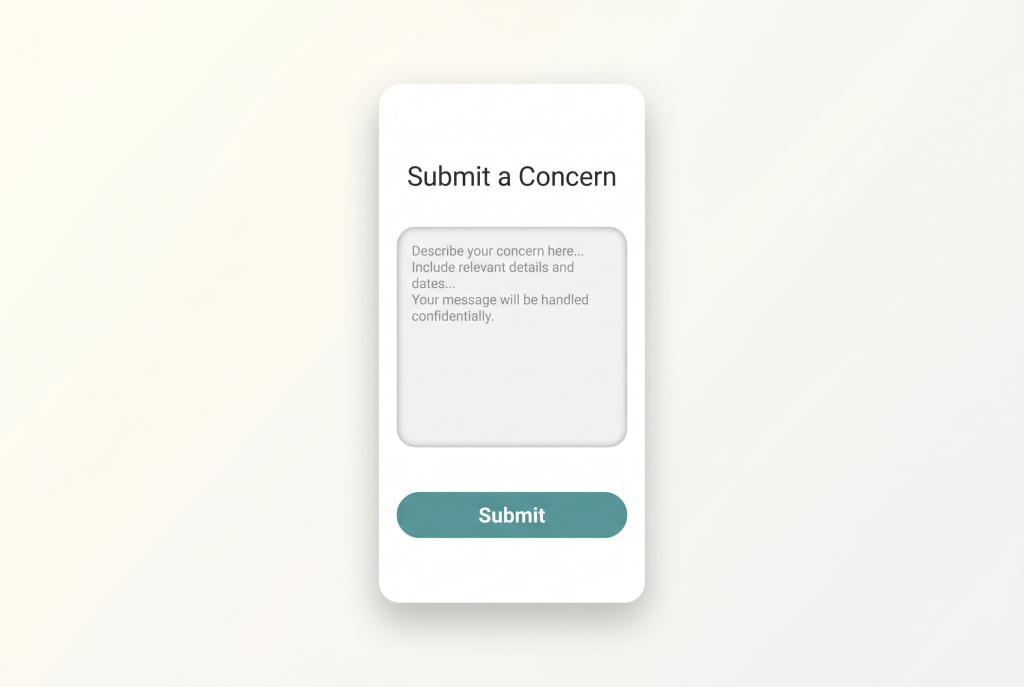
It starts with accessibility. Employees need to be able to raise a concern without it automatically becoming a formal, documented escalation. Most real grievances start informally, and a process that jumps straight to formal written submissions creates a barrier that filters out most of the complaints that should be caught early.
A tiered approach works better. An informal conversation about a concern can be held between a manager or HR representative and an employee. There’s no formal investigation or paperwork involved; instead, this is an attempt to establish trust with an employee by understanding the concern and addressing it. If a response is taken seriously and addressed promptly, many grievances are often able to be resolved in this informal tier.
The formal process is the second tier. This may involve a formal complaint being made by an employee against their line manager or as a result of a series of unsuccessful conversations and attempts to resolve issues through informal mechanisms.
At this point, there’ll be a written record of the complaint as well as a defined process to be followed during the investigation, and ultimately, the employee will receive written notification of the outcome of the complaint within a certain timeframe.
Escalation is the third tier; this can be done to either senior management, to an independent reviewer, or to an ombudsman (if such a role exists in the organisation) for resolution of the complaint.
This tier exists so that employees who feel the formal process produced an unfair outcome have somewhere to go internally before the external option of the labour authority becomes the only one remaining.
The person conducting any investigation needs to be independent of the situation being investigated. This sounds obvious, but it is frequently not done. When the person investigating a complaint about a manager is that manager’s peer or friend, the investigation is not credible, and the employee knows it.
The Documentation Question
There is a tension that comes up often in grievance handling: the organization does not want to create documentation that could be used against it in a legal dispute, so it avoids writing things down. This instinct is understandable and almost always wrong.
Undocumented grievance processes create more legal risk, not less. When a complaint reaches the labor authority, and the employer cannot demonstrate that a proper internal process was followed, the absence of documentation is itself evidence of a failure to handle the matter appropriately.
A well-documented grievance process, even one that resulted in a finding the employee disagreed with, demonstrates that the organization took the complaint seriously and followed a fair procedure.
What documentation should exist: a record that the complaint was received and when, a summary of the investigation steps taken and who was involved, the findings, the outcome communicated to the employee, and any follow-up actions committed to. That is not a complex set of records. It is a basic paper trail that protects both the employee and the employer.
For context on how documentation fits into the broader picture of HR compliance in Egypt, the piece on the HR Audit Checklist and How To Review Your HR Processes covers how to assess whether your current processes are producing the right records.
The Manager’s Role and Where It Usually Goes Wrong
Most grievances surface at the manager level first, which means managers are the frontline of the grievance process, whether they think of themselves that way or not. A manager who responds to a complaint with defensiveness, dismissiveness, or silence is not just failing to solve the problem. They are actively escalating it.
The managers who handle grievances well tend to do a few things consistently. They listen without immediately defending themselves or the organization. They take notes. They tell the employee clearly what the next step is and when they will hear back.
They follow up when they said they would. None of that is complicated. None of it requires a legal background. It requires someone who understands that how a concern is received matters as much as how it is eventually resolved.
Training managers on how to receive and respond to complaints is something most organizations skip. It shows. The investment is modest, and the impact on early resolution rates is significant.
A manager who can handle an informal complaint well at the first tier removes a large proportion of the cases that would otherwise work their way to formal processes and eventually to external escalation.
The way employees experience management and fairness in their day-to-day work directly shapes how likely they are to raise concerns internally versus externally.
The piece on Employee Experience and What Actually Impacts Satisfaction covers this connection in more detail, including what actually drives the trust that makes internal grievance routes feel worth using.
The Egyptian Legal Context
Egyptian labor law gives employees the right to file complaints with the labor authority when they believe their rights have been violated. This is a legitimate and accessible route that employees use when the internal option feels unavailable or has already failed them.
The labor authority investigation process is time-consuming and disruptive for employers regardless of the outcome.
An investigation, regardless of its ultimate conclusion, takes a significant amount of management time, can affect employees’ morale if made public, and carries with it an undesirable reputation, which is difficult to separate from its legal ramifications.
As such, there is real value in making investments to keep complaints from going to labor authorities. These investments are worthwhile for several reasons. First, keeping complaints from labor authorities means avoiding the costs associated with litigating and defending those complaints.
Second, the types of events that lead to labor complaints (such as inequitable treatment, inconsistency in management, or failure to pay) are costly to the business in terms of losing good employees, losing productivity from employees that are not engaged or motivated, as well as incurring the cost of training or hiring additional people.
The grievance process is both a legal protection and a signal to employees about whether the organization operates fairly.
When a situation does become legally complicated or a complaint has already been filed externally, getting advice from a lawyer with Egyptian labor law expertise early is the right call.
The same principle applies here as with employee exits: the cost of that conversation is worth it before the dispute progresses rather than after.
Building a Process That Employees Actually Use
The test of a grievance process is not whether it exists on paper. It is whether employees who have a concern believe it is worth raising internally.
That belief is built over time through how previous complaints were handled, and it is destroyed quickly by a single high-profile example of someone raising a concern and being worse off for it.
Confidentiality matters here. Employees need to trust that raising a grievance will not result in their complaint becoming common knowledge in the team or being used against them in future management decisions.
This is harder to guarantee in a small organization than a large one, but the commitment to it needs to be genuine and communicated clearly.
Anonymous reporting mechanisms, whether a dedicated email address, a suggestion box, or a third-party channel, can be useful for capturing concerns that employees would not raise through a named process.
These work best as a supplement to a functional formal process rather than as a replacement for one.
Reviewing grievance data periodically is something very few small businesses do and most should. Individually, a grievance is a single incident. Collectively, they are a map of where the organization has management problems, policy gaps, or fairness issues that are affecting multiple people.
A pattern of complaints from the same team or about the same manager is not bad luck. It is information.
Keeping employee records, documentation, and HR communications organized in one place makes this kind of review much more practical.
The piece on Building Trust with Employees Through Digital Systems covers how digital HR infrastructure connects to the broader question of employee trust and organizational fairness.
Conclusion
Grievances that reach the labor authority almost always started somewhere smaller and were given enough time and neglect to grow. A functioning internal process is not a bureaucratic formality.
A Grievance Mechanism allows for the identification of issues when they can still be resolved and informs staff of the value that an organisation places on treating employees equitably.
Having an effective Grievance Mechanism relies on a proper multi-tiered system that is truly accessible for staff; training for managers on how to appropriately receive a grievance and not exacerbate an issue; proper documentation to safeguard all parties involved; and an individual who has overall responsibility for the Grievance Mechanism and to assess when patterns develop from grievances filed.
bluworks provides organizations with a systematic and structured approach to HR documentation, and employee records are the operational foundation that a successful Grievance Mechanism relies upon.
Frequently Asked Questions
Is a formal grievance procedure legally required in Egypt?
Not mandated by law as a written document, but Egyptian labor law gives employees the right to file complaints externally. A documented internal process is the most practical way to resolve complaints before they reach that stage.
How long should a grievance investigation take?
Acknowledging receipt within two to three working days and reaching a conclusion within two to three weeks is a reasonable standard for most complaints. Delays signal to the employee that the process is not being taken seriously.
What should an employer do if a labor authority complaint is already filed?
Seek legal advice from a lawyer familiar with Egyptian labor law immediately. Gather documentation of any internal process that was followed. Do not communicate with the employee about the complaint without legal guidance in place.