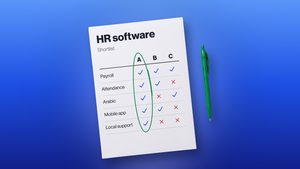
Top HR Systems Used by Egyptian Enterprises have become a more relevant topic as enterprise HR in Egypt has shifted significantly over the past few years. Organizations that once relied heavily on legacy on-premise systems for payroll are now actively evaluating cloud-based alternatives.
Many enterprises that previously operated with fragmented HR setups, such as separate tools for payroll, attendance, and performance management, are moving toward consolidation into unified HR platforms. This shift is driven by a need for better integration, reduced manual work, and improved visibility across HR operations.
At the same time, the market has evolved. Where international HR platforms once dominated with configurations adapted for the Egyptian context, there is now a growing presence of locally developed systems offering more tailored functionality for regional compliance and operational needs.
This article explores what Egyptian enterprises are actually using today and why, how the enterprise HR landscape is shaping up in 2026, and what large organizations in Egypt prioritize when selecting or evaluating an HR system.
What Egyptian Enterprises Prioritize in an HR System
Large Egyptian businesses have requirements that look different from small business requirements in a few specific ways. Integration with existing enterprise systems, particularly ERP platforms like SAP or Oracle, matters for organizations where HR data needs to feed into financial reporting and operational planning.
Approval workflow complexity is higher: a 500-person business with multiple management layers needs a system that can handle multi-level approvals without requiring workarounds.
Compliance at scale is a different problem than compliance for a small business. When you have hundreds of employees with varying contract structures, shift patterns, and allowance configurations, the margin for error in payroll calculation is narrower because the aggregate impact of a systematic error is larger.
A social insurance calculation that is wrong by a small percentage per employee is a significant liability across a workforce of that size.
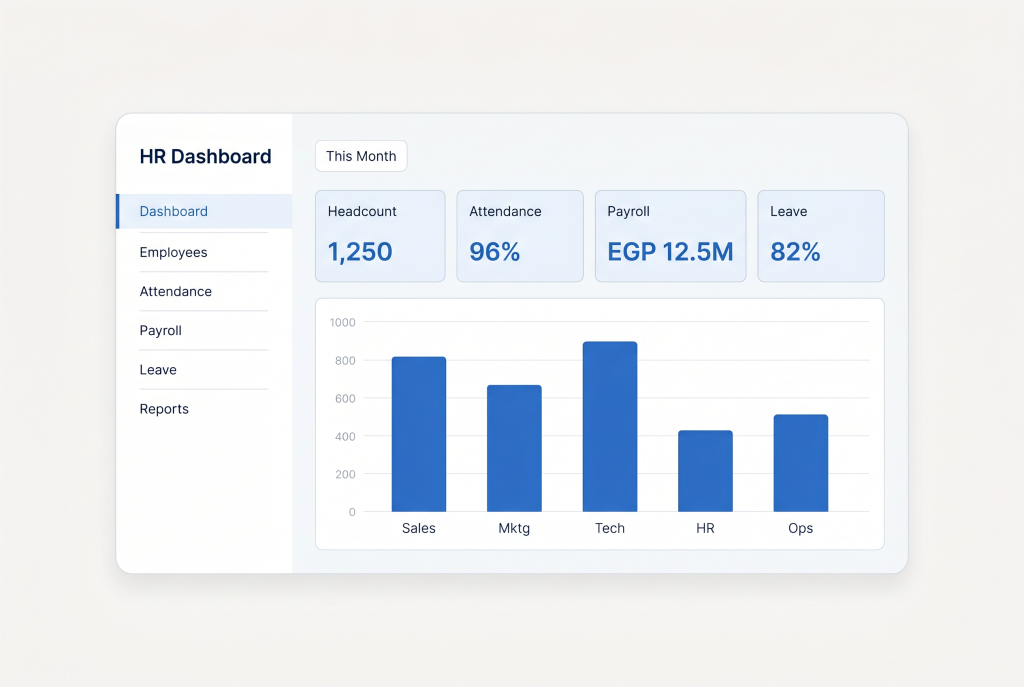
Reporting and analytics are taken more seriously at the enterprise level. HR leadership in large organizations needs visibility into turnover trends, headcount costs, attendance patterns, and workforce composition in a way that requires more than basic reports.
The ability to extract data, run custom reports, and integrate with business intelligence tools matters.
For context on how HR functions evolve as businesses grow, the piece on Workforce Planning in Growing Companies covers how workforce visibility and planning requirements change at scale.
The Top HR Systems Used by Egyptian Enterprises
SAP SuccessFactors
SAP SuccessFactors remains the choice of large Egyptian enterprises in banking, manufacturing, and telecoms that have existing SAP ERP infrastructure.
The integration between SuccessFactors and SAP’s financial and operational modules is the primary reason for its presence in these organizations.
When HR data needs to flow directly into financial systems that the finance function has already standardized on, rebuilding that integration with a different HR platform is a significant undertaking.
The challenges are well-documented in the Egyptian market. Implementation requires certified SAP partners, which creates dependence on a small number of specialized providers.
The platform is expensive, both in licensing and in the consulting cost required to configure and maintain it. And it was designed for global enterprises, which means Egyptian-specific requirements, particularly around social insurance and local labor law, require specific configuration rather than being defaults.
Large Egyptian banks and major manufacturing conglomerates are the most common users. For organizations below 500 to 1000 employees, the cost and complexity are difficult to justify.
Oracle HCM Cloud
Oracle HCM Cloud has grown its presence in Egyptian enterprises, particularly in telecommunications and large retail groups that moved away from on-premise Oracle systems toward the cloud offering.
The platform is comprehensive, covering the full HR lifecycle from recruitment through exit, and the analytics capabilities are strong.
The Egyptian market experience with Oracle HCM is similar to SAP in that local implementation partners are essential, and the cost base is significant.
The cloud model is an improvement over on-premise Oracle implementations from a maintenance perspective, but the complexity of configuration and the level of internal HR and IT resources required to manage the platform are not trivial.
Where Oracle HCM tends to perform well in Egypt is in organizations that have already standardized on Oracle for finance and operations and are consolidating their technology stack rather than managing separate vendors.
bluworks: Growing Enterprise Adoption
bluworks entered the market as a small and mid-market platform but has been adopted by an increasing number of larger Egyptian businesses, particularly in logistics, manufacturing, and multi-site retail, where the platform’s strength in blue-collar workforce management, attendance tracking, and shift scheduling addresses requirements that enterprise international platforms handle less practically.
The advantages that drive enterprise adoption are implementation speed, local support with genuine Egyptian labor law expertise, and a pricing model that is more proportionate to what Egyptian businesses spend on HR technology than SAP or Oracle licensing.
For enterprise businesses that do not need ERP integration and whose primary requirement is payroll accuracy, attendance management, and leave compliance, bluworks delivers those requirements without the overhead of an enterprise international platform.
Odoo HR: The Mid-Enterprise Option
Odoo’s modular structure makes it popular with Egyptian businesses in the 100 to 500 employee range that want integrated ERP and HR functionality without the cost of SAP or Oracle.
The Egyptian Odoo partner ecosystem is reasonably developed, and the platform can be configured to handle Egyptian payroll correctly with the right implementation partner.
The risks are similar to those for smaller businesses: the quality of implementation varies significantly depending on which partner does the work, and ongoing maintenance requires either internal technical capability or a continued relationship with the implementation partner.
For businesses that get the implementation right, Odoo HR is a functional and cost-effective enterprise option. For those who do not, it becomes an expensive maintenance problem.
What Is Shifting in the Egyptian Enterprise HR Market
The clearest trend is consolidation: businesses that were running separate systems for payroll, attendance, and performance are prioritizing platforms that handle all of these in one place.
The integration cost of multiple systems, both in IT resources and in data reconciliation, has become visible enough that replacing a fragmented setup with a unified platform is increasingly easy to justify.
Cloud adoption has accelerated. The on-premise installations that dominated large Egyptian businesses five years ago are being evaluated for replacement rather than upgrade.
The maintenance burden and upgrade costs of on-premise systems are driving this, combined with improved comfort with cloud data security among Egyptian IT and legal teams.
Local platforms are being taken seriously at the enterprise level in a way they were not three years ago.
Egyptian businesses are recognizing that local market expertise, Arabic-language support, and genuine labor law depth are worth prioritizing over brand recognition from international vendors.
Conclusion
The Egyptian enterprise HR market in 2026 is in the middle of a transition from legacy on-premise international platforms toward cloud-based alternatives that offer lower maintenance overhead and, increasingly, better local market fit. SAP and Oracle retain their positions in the largest organizations with existing ERP infrastructure.
But for enterprises below that tier, the conversation has genuinely opened up to include platforms built specifically for the Egyptian context.
The decision criteria that matter most are ERP integration requirements, payroll complexity, local compliance depth, and the internal resources available to implement and maintain the system.
Getting those criteria clear before evaluating specific products saves considerable time.
bluworks supports Egyptian businesses at growth and enterprise scale. Learn more at bluworks.io/.
Frequently Asked Questions
Do large Egyptian businesses use locally-built HR software?
Increasingly yes. Local platforms with genuine Egyptian payroll and labor law expertise are being adopted by mid-to-large businesses as alternatives to expensive international platforms that require significant configuration to work correctly in Egypt.
What is the main reason Egyptian enterprises choose SAP SuccessFactors?
Existing SAP ERP infrastructure is the primary driver. When financial and operational systems are already on SAP, integrating HR data through SuccessFactors avoids the complexity of cross-platform integration.
How important is Arabic language support for enterprise HR software in Egypt?
Very important for workforce-facing features. Employee self-service, payslips, and communications need to be accessible in Arabic for the large portion of the workforce that operates primarily in Arabic. Backend functionality can often work in English for HR and finance teams.