

The employee lifecycle in a company follows a kind of arc — from the first moment they hear about the organization to the day they eventually walk out the door. Each stage along the way shapes how engaged, productive, and committed they end up being.
For HR teams, understanding that arc matters a lot. Manage each stage well, and you end up attracting better talent, supporting real growth, improving retention, and building a culture people actually want to stick around for.
This guide walks through the full employee lifecycle, why it matters, and how HR can strengthen every stage — from the first hire to the final exit interview.
What Is the Employee Lifecycle, Exactly?
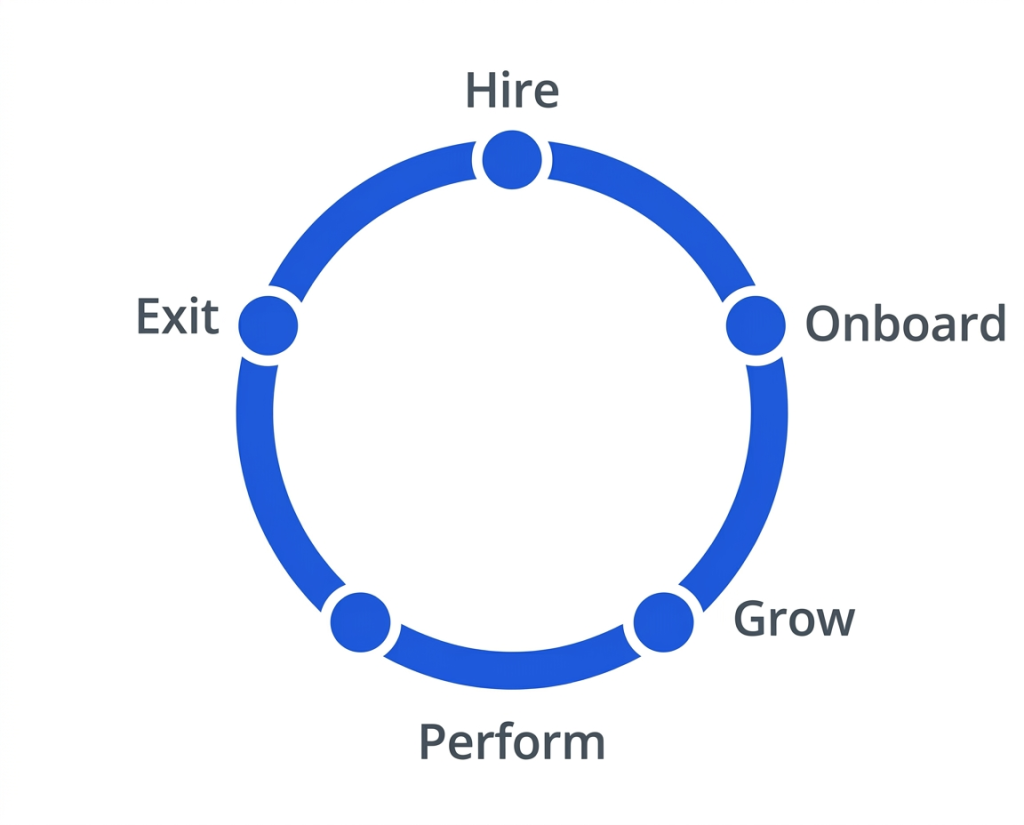
It’s the full journey someone takes with your organization — attraction, hiring, onboarding, development, performance, retention, and eventually, offboarding.
Every stage is a chance to make the experience better while still serving the business. Instead of treating recruitment, onboarding, and performance management as separate, disconnected processes, lifecycle thinking ties them together into one continuous story.
Manage that story well across every stage, and employees tend to stay more engaged, perform better, and stick around longer.
Why Employee Lifecycle Management Matters
Getting the lifecycle right pays off on both sides — for employees and for the business. It helps you:
- Create a better overall experience. Consistency from recruitment all the way through offboarding, instead of a good start and a rough finish.
- Boost engagement. People who feel supported at every stage tend to stay more motivated and productive.
- Improve retention. Investing in development, recognition, and growth gives people real reasons to stay.
- Strengthen culture. Consistent practices reinforce what the company actually stands for.
- Sharpen workforce planning. Understanding patterns across the lifecycle informs smarter hiring and development decisions.
- Increase productivity. People perform better when they’re actually supported, not just onboarded and forgotten.
- Attract better talent. A strong employee experience becomes part of your employer brand — and that brand does a lot of the recruiting work for you.
The Stages of the Employee Lifecycle
Stage 1: Attraction
The lifecycle actually starts before anyone applies. Attraction is about building a reputation strong enough that talented people want in.
That means showcasing things like:
- Company culture
- Employee value proposition
- Career opportunities
- Benefits
- Employer reputation
A solid careers page, real employee testimonials, and a genuinely good candidate experience all do heavy lifting here.
Stage 2: Recruitment and Hiring
Once applications start coming in, the real work begins — job postings, screening, interviews, skills assessment, and finally, a decision.
Finding the right person matters, obviously. But so does how it feels to go through the process. Clear communication and timely updates leave a good impression — whether someone gets the job or not.
Stage 3: Onboarding
Hiring well is only step one. A structured onboarding process is what actually helps new employees settle in and start contributing quickly.
Good onboarding usually covers:
- Company orientation
- Role-specific training
- Company policies
- Introductions to managers and teammates
- Early performance goals
Get this right, and people feel confident and connected from day one — instead of spending their first month figuring things out on their own.
Stage 4: Employee Development
Learning shouldn’t stop once onboarding wraps up. People want to keep growing — new skills, new responsibilities, a real career path.
That can look like:
- Skills training
- Professional development programs
- Mentorship
- Leadership development
- Career planning
This benefits everyone — employees grow, and the business ends up with people who are ready for what’s next.
Stage 5: Performance Management
This is where people find out how they’re actually doing and where they can improve. Increasingly, that doesn’t mean one dreaded annual review — it means ongoing conversations and real-time feedback.
Effective performance management tends to include:
- Goal setting
- Regular feedback
- Formal reviews
- Recognition
- Development planning
Done well, this keeps people motivated while keeping individual work aligned with what the business actually needs.
Stage 6: Engagement and Retention
Keeping people engaged might be one of HR’s most important jobs — engaged employees are more productive, more invested, and far less likely to leave.
Worth focusing on:
- Recognition
- Career growth
- Well-being initiatives
- Open communication
- Work-life balance
- Engagement surveys
Listening to feedback — and actually acting on it — is what makes people feel like their input matters.
Stage 7: Offboarding
The lifecycle doesn’t end the moment someone resigns. A well-handled offboarding process helps people leave on good terms while protecting the knowledge and continuity the business needs.
That includes:
- Exit interviews
- Final documentation
- Knowledge transfer
- Returning company equipment
- Keeping the relationship positive on the way out
A respectful exit does more than just close a chapter — it keeps the door open for referrals, or even a future rehire.
Best Practices for Managing the Whole Journey
A few things that make a real difference across every stage:
- Keep the experience consistent. People should get clear communication and support at every step, not just the exciting parts.
- Train managers well. They’re the ones actually delivering feedback and supporting development day to day.
- Gather feedback regularly. Surveys, one-on-ones, performance conversations — all of it tells you what’s actually working.
- Support continuous learning. Ongoing development, not a one-time onboarding course.
- Recognize achievements. It’s a small thing that has a real effect on motivation and retention.
- Use real data. Track the metrics that actually tell you where hiring, development, or retention need work.
- Keep reviewing your processes. What worked a year ago might not work now — revisit regularly.
Common Mistakes Worth Avoiding
A lot of companies pour all their energy into recruitment and quietly neglect everything after. Watch out for:
- Obsessing over recruitment while ignoring the rest of the journey
- Weak or inconsistent onboarding
- Thin learning and development opportunities
- Performance reviews that happen once a year and nothing in between
- Ignoring engagement survey results
- Skipping offboarding entirely
- Treating each stage as its own silo instead of one connected journey
Avoiding these keeps the experience consistent and positive from start to finish.
Where HR Software Fits In
Managing every stage of this by hand gets a lot harder as a company grows. HR software pulls recruitment, records, performance, learning, and workforce data into a single place.
With the right platform, you can:
- Manage recruitment and hiring
- Simplify onboarding
- Store employee records securely
- Track performance and goals
- Support learning and development
- Monitor engagement
- Streamline offboarding
- Generate workforce reports
Having one system covering the entire lifecycle cuts admin work and gives HR much better visibility into what’s actually happening across the employee experience.
Platforms like bluworks help organizations manage every stage of the employee lifecycle from one place — making it easier to support people while keeping HR efficient.
Wrapping Up
Every stage of the employee lifecycle plays a role in shaping how people experience your company — and how well the business performs as a result. From attracting the right people to sending them off well when the time comes, consistency is what builds stronger, more engaged teams.
With bluworks, HR teams can manage the entire employee lifecycle in one place and create a better experience for people from their first day to their last.
Frequently Asked Questions
What are the stages of the employee lifecycle?
Typically seven: attraction, recruitment and hiring, onboarding, development, performance management, engagement and retention, and offboarding. Each one shapes the overall experience and contributes to business success.
Why does employee lifecycle management matter?
It improves the employee experience, boosts engagement, strengthens retention, and supports smarter workforce decisions — all of which reinforce a stronger culture and employer brand.
How does HR software help manage the lifecycle?
It centralizes employee data and brings recruitment, onboarding, performance, learning, and offboarding together in one place — giving HR teams the visibility they need to manage the full journey more efficiently.