

Ask ten HR managers what their biggest hiring frustration is, and at least seven of them will tell you some version of the same story.
They spent weeks finding someone, the person looked great in interviews, and then three months into the job, it became obvious the role itself had never really been defined.
Not properly. Nobody had sat down and figured out what the job actually was before writing the posting.
Job analysis is the name for doing that properly. And honestly, it sounds more technical than it is.
At its core, it is just asking: what does this role actually involve, who does it interact with, what does someone need to know to do it well, and what does good performance look like in practice. That is the whole thing.
The formal methods and frameworks that get built around it are useful but secondary to the basic discipline of actually answering those questions before you make decisions that depend on them.
Why This Is Called a Foundation and Not Just Another HR Task
Hiring criteria come from it. Pay benchmarks need it. Performance management falls apart without it. If those three things are all built on top of a clear understanding of what a role requires, they tend to work reasonably well.
If they are built on assumptions, gut feel, and whatever the last person in the role happened to be paid, they produce problems that are expensive and slow to fix.
Think about pay equity complaints, which are increasingly common. The employer’s position in those situations depends heavily on being able to explain why two roles are compensated the way they are.
That explanation requires documented role definitions. Without them, you are arguing from memory, which is not a strong position.
Or think about performance management. If you never defined what the role was supposed to produce, every performance conversation becomes a disagreement about what the job even is before you can get to how well it is being done. Managers find this exhausting. Employees find it unfair. Both of them are right.
If you want more context on how job analysis sits within the overall structure of what an HR function is responsible for, the piece on HR Responsibilities and Roles Explained gives a useful overview of how the different HR activities connect to each other.
What You Are Actually Collecting When You Do a Job Analysis
The output you are working toward is a documented picture of the role that is accurate enough to base real decisions on.
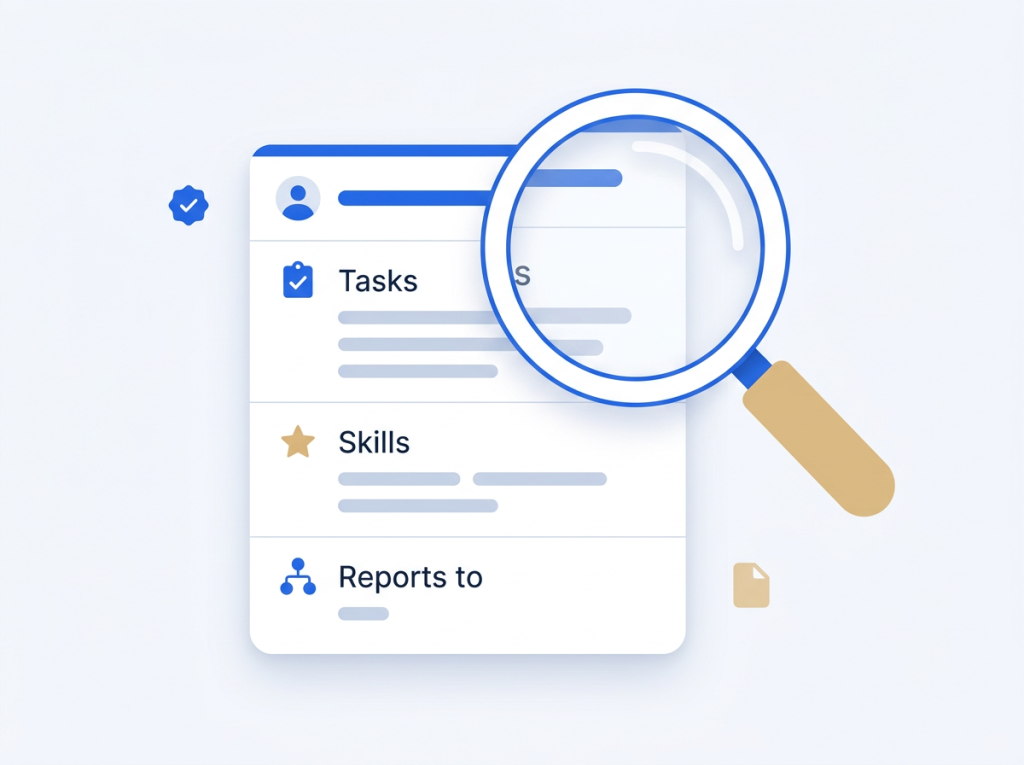
That picture needs to include what tasks the person does day to day, which of those tasks are core versus occasional, what skills and knowledge the work genuinely requires, how the role connects to others around it, and what conditions the person works under.
Notice that the list does not include what the job title suggests or what the original job description said when the role was created four years ago.
Roles drift. What someone was hired to do in 2021 may bear only partial resemblance to what they actually spend their time on in 2025. A job analysis captures what the role is now, not what it was intended to be when it was invented.
That gap between the written description and the lived reality is often larger than managers expect.
It shows up most clearly when someone leaves, and you try to write the replacement posting from the old description, and the people who worked alongside the departing employee keep telling you that it is not quite right.
The Methods, and Which Ones Are Worth Your Time
Interviews are where most good job analyses start. You talk to people currently in the role about what they actually do.
Not what they think they are supposed to do, but what they actually do. Then you talk to their managers about what they need from the role. These two perspectives will not be identical, and that gap is informative.
For operational or physical roles, observation adds something that interviews miss. There are always tasks so routine that people stop consciously registering them and therefore do not mention them when asked. Watching someone do the job for a few hours catches those.
Work diaries are underused. Asking employees to log their activities for a week or two produces a picture of where time actually goes that is often quite different from how they describe their job verbally.
Particularly useful for roles that have grown organically and where the official description is largely ceremonial at this point.
Surveys work when you need to analyze many roles at once, and one-on-one interviews are not practical at that scale. They sacrifice some depth but gain efficiency.
Use more than one method if you can. The cross-checking is where you find the inconsistencies that turn out to matter most.
Turning the Data Into Something Useful
Once you have gathered information from multiple sources, the job is to organize it into something a hiring manager can use to write interview questions, something a compensation analyst can use to benchmark pay, and something a manager can use to set performance expectations.
That is the test: can someone who was not involved in the analysis use this document to make a real decision?
Group tasks by category rather than listing them in the order you happened to collect them.
Flag which tasks are essential versus which are nice to have or occasional. Note where the sources you consulted agreed and where they diverged, because the divergences often point to something worth clarifying.
Then get it reviewed. By the people doing the job. By their managers. Not as a formality, but because they will catch wrong things, and the credibility of the analysis depends on the people it describes recognizing themselves in it.
How This Connects to Workforce Planning
Once you have job analyses for a meaningful number of roles, you start being able to see things at an organizational level that were not visible before. Which roles have expanded well beyond what the job description implies?
Where you have two roles that overlap significantly enough that the structure is creating confusion rather than clarity. Which capabilities are thin across the organization and will become a problem as the business grows?
This is what workforce planning actually needs to work from. Without clear role definitions, planning conversations tend to reduce to headcount debates rather than capability conversations, and headcount debates are a lot less useful.
The piece on Workforce Planning in Growing Companies covers how growing businesses can approach this kind of planning in a way that is actually connected to how the business operates rather than just being an annual exercise in producing numbers.
The Maintenance Question
Job analyses go stale faster than most HR documentation because roles change constantly. New tools get introduced. Teams restructure. A person grows into a role and takes on things that were not originally part of it. None of that is captured automatically.
The practical approach is to treat any significant change to a role as a trigger for reviewing the analysis, and to build in a broader annual review for all roles where nothing obvious has changed.
The review does not have to start from scratch. It is mostly a question of: has anything material shifted since we last looked at this?
Involve the same people you involved the first time. The person in the role and their manager. Between them, they know what has changed and why.
Conclusion
Job analysis is one of those things where the businesses that do it regularly tend not to fully appreciate what they are avoiding, because the problems it prevents are invisible to them.
The businesses that skip it can tell you exactly what it costs, usually through a specific bad hire or a pay dispute, or a performance management situation that turned messy because nobody had clearly defined what the job was.
The case for doing it is not really philosophical. It is just that every major HR decision you make about a role is more likely to be the right one when it is grounded in an accurate understanding of what that role actually requires.
Bluworks gives businesses a single place to manage employee records, documentation, and HR processes so the information you need is actually findable when you need it.
Frequently Asked Questions
How often should a job analysis be updated?
Any significant role change is a good trigger. Beyond that, an annual check works for stable roles. The point is catching drift between what the document says and what the job actually is before that gap causes a real problem.
Who should be involved in a job analysis?
The person doing the job and the person managing it, at a minimum. HR manages the process. Getting both perspectives matters because what each of them sees in the role is genuinely different, and both are relevant.
Can job analysis support legal compliance in Egypt?
Yes. Documented role expectations are relevant in performance disputes and investigations under Egyptian labor law. Having clear records of what was expected and communicated strengthens the employer’s position considerably.