Net Salary & Income Tax Calculator – Egypt (2026)
Enter a gross monthly salary and get an instant breakdown of social insurance, income tax, and take-home pay — based on the current progressive tax brackets and the latest insurance wage ceilings.
| Gross monthly salary | — |
| Employee social insurance (11%, capped) | — |
| Monthly income tax (annualized, ÷12) | — |
| Net salary you take home | — |
This is an estimate for planning purposes. It uses a single flat 11% employee insurance rate on the insurable wage — real payslips sometimes split “basic” and “variable” wage components differently, which can shift the number slightly. It also assumes no additional allowances, loan deductions, or exempted income.
How this number is calculated
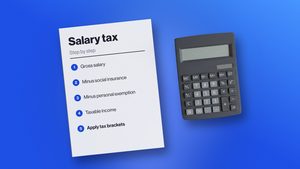
Two separate deductions come off a gross salary in Egypt: social insurance, then income tax on what’s left. The order matters, because insurance is deducted first, and income tax is calculated on the income that remains after that, not on the full gross figure.
1. Social insurance (تأمينات اجتماعية)
Employees contribute 11% of their “insurable wage” toward social insurance, and employers add a larger share on top (not deducted from the employee, but part of the total cost of employment). The insurable wage isn’t unlimited, it’s capped. As of January 2026, the monthly ceiling for insurance purposes is 16,700 EGP, with a floor of 2,700 EGP. So if someone earns 30,000 EGP a month, insurance is still calculated on 16,700, not the full salary, the rest is only subject to income tax.
2. Income tax, applied in slices
Egypt uses a progressive bracket system, not a flat percentage. That means only the portion of income that falls inside a given bracket gets taxed at that bracket’s rate, not the entire salary. A person earning enough to reach the 20% bracket doesn’t pay 20% on everything; they pay 0% and 10% and 15% on the earlier slices, and only the top slice at 20%.
There’s also a personal exemption of 20,000 EGP a year that comes off net annual income before any bracket is applied, and the first 40,000 EGP after that is taxed at 0% for most salary levels. As total annual income climbs past 600,000 EGP, the brackets shift slightly to avoid a sudden jump in tax owed, the table below shows exactly how.
| Annual net income up to | 0% | 10% | 15% | 20% | 22.5% | 25% | 27.5% |
|---|---|---|---|---|---|---|---|
| 600,000 EGP | 0–40k | 40–55k | 55–70k | 70–200k | 200–400k | 400–600k | — |
| 700,000 EGP | — | 0–55k | 55–70k | 70–200k | 200–400k | 400–700k | — |
| 800,000 EGP | — | — | 0–70k | 70–200k | 200–400k | 400–800k | — |
| 900,000 EGP | — | — | — | 0–200k | 200–400k | 400–900k | — |
| 1,200,000 EGP | — | — | — | — | 0–400k | 400k–1.2M | — |
| Above 1,200,000 | — | — | — | — | — | 0–1.2M | 1.2M+ |
Source: Law 7/2024, amending Articles 8 and 13 of Income Tax Law 91/2005. Brackets apply per column depending on where total annual net income falls. This is what stops someone from suddenly owing far more tax after crossing a threshold by a small amount.
A worked example
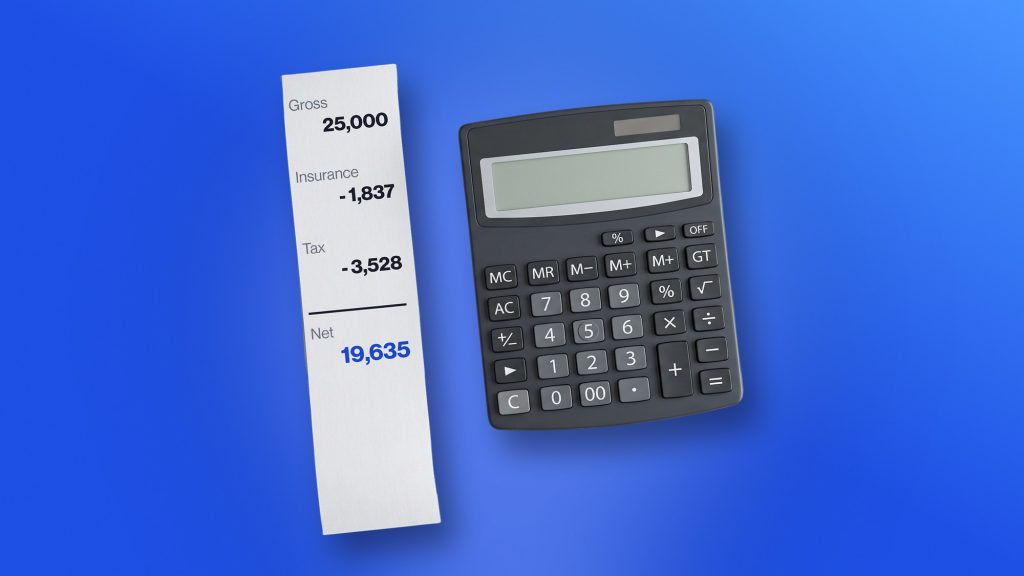
Take someone earning 25,000 EGP gross per month, with no extra allowances. Their insurable wage is capped at 16,700 EGP, so social insurance comes out to roughly 1,837 EGP a month (11%). That leaves about 23,163 EGP net of insurance, or 277,956 EGP a year. Subtract the 20,000 EGP personal exemption and the bracket calculation runs against 257,956 EGP — landing mostly in the 20% bracket, with smaller slices taxed at 0%, 10%, and 15% below it. The annual tax comes out to roughly 42,340 EGP, or about 3,528 EGP a month. Net take-home lands close to 19,635 EGP — use the calculator above to check the exact figure for a different salary.
Frequently asked questions
Are allowances like transport or housing taxed?
Generally yes — almost everything an employee receives from an employer because of the job counts toward the taxable wage, including transport allowances, “nature of work” allowances, incentives, bonuses, and overtime. There are a handful of specific legal exemptions, but as a default assumption, treat allowances as taxable unless a specific article says otherwise.
Do I need to file an annual tax return as an employee?
If your salary from a single employer is your only source of income, and tax is already withheld correctly at source, you’re typically not required to file a separate annual return. Anyone with more than one income source, freelance income on the side, or income the employer isn’t withholding on should check with an accountant.
Why did my insurance deduction stop increasing even though my salary went up?
Because the insurable wage is capped — 16,700 EGP a month as of 2026. Once gross salary passes that ceiling, the extra amount is still subject to income tax, but not to social insurance, so the insurance line on the payslip stops growing.
Is end-of-service gratuity or a pension taxed the same way?
No — end-of-service benefits and pension income are treated differently under the law and are generally exempt from this salary tax structure. This calculator is built specifically for monthly salary income, not severance or retirement payouts.
How often do these numbers change?
The tax brackets themselves have changed a few times in recent years (2023, then again with Law 7/2024), and the social insurance wage ceiling is adjusted annually, usually every January. It’s worth rechecking this page or a payroll system’s tax tables at the start of each year rather than assuming last year’s numbers still apply.
Running this by hand for a whole team gets old fast
This calculator is useful for a single quick estimate. For actual payroll — where you’re tracking attendance, overtime, penalties, and tax tables for dozens or hundreds of employees at once — that’s a different problem. bluworks calculates salaries automatically from real attendance data, applies current Egyptian tax and insurance rules, and keeps the numbers audit-ready. If you’re curious what that looks like for your team, our step-by-step payroll guide is a good starting point, or you can see it live.
Book a live demoThis tool provides an estimate for general planning purposes only and isn’t tax or legal advice. Tax brackets, exemptions, and insurance ceilings are set by the Egyptian Tax Authority and the National Organization for Social Insurance and can change; always confirm current figures before making payroll or financial decisions, and consult a licensed accountant for anything binding.