One restaurant is hard enough to staff. Add a second, third, or tenth location, and hiring turns into something else entirely. Each branch has its own crowd, its own rush hours, its own local labor market that doesn’t look anything like the one two neighborhoods over.
Still, the business needs some thread of consistency running through all of it. Managers have to move quickly and still make sure every branch has enough hands to get through a Friday night.
A clear strategy is what makes that possible. Pair standard hiring steps with planning that actually accounts for each location, and restaurants end up pulling in better candidates, hiring faster, and building teams that hold up branch to branch.
Recruitment Strategies for Multi-Location Restaurants
Restaurants with several branches need a recruitment approach that works across the business while still accounting for the needs of individual locations.
The following strategies can help restaurants organize hiring, reach more candidates, and make better recruitment decisions.
Create a Standardised Recruitment Process
Let every branch run its own version of hiring, and standards start to drift. One candidate gets grilled on five things; another gets waved through after a ten-minute chat. Managers waste hours building procedures that should’ve existed already.
A standardised process fixes that without stripping out local judgment where it’s genuinely needed.
Start with:
- Standard job descriptions for common roles
- Clear requirements per position
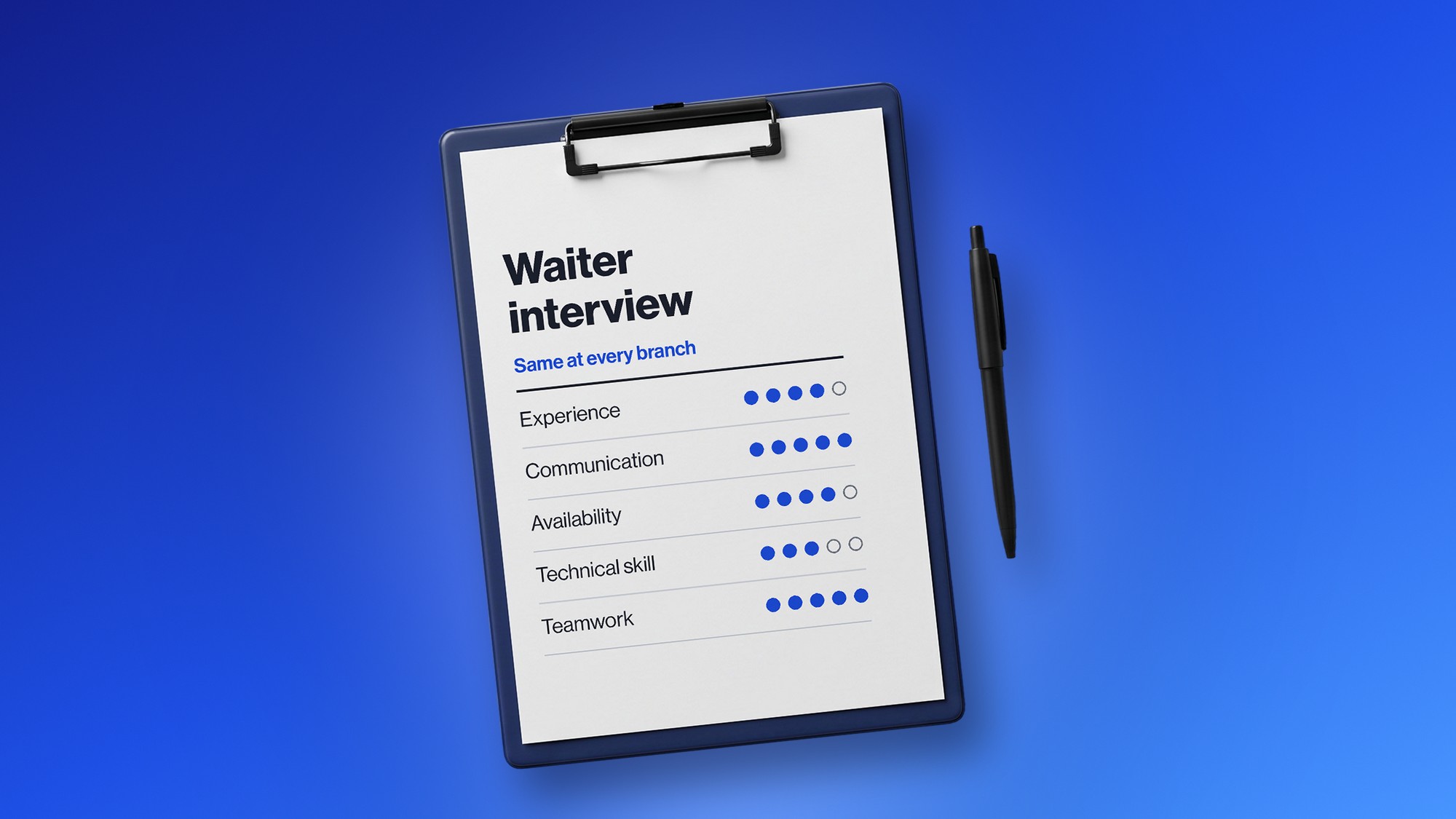
- Consistent interview questions
- A simple way to score candidates
- Defined steps from application to offer
Hiring waiters across six branches? The core skills and responsibilities in that job description should look basically identical no matter which location posted it. From there, every manager is judging candidates against the same bar.
That consistency makes candidates easier to compare, and it keeps hiring from quietly sliding into whatever each manager happens to prefer.
Hire Based on Each Location’s Needs
Standardisation only gets you halfway there. Every location has its own reality. A branch stuck in the middle of a busy shopping strip probably needs more hands than one tucked into a quiet residential block, and some locations spike hard every summer while others barely move.
Before a vacancy goes up, managers should actually look at that specific branch’s numbers.
Worth checking before posting anything:
- Customer volume and average daily orders
- Peak days and busy hours
- Current staffing levels
- Expected seasonal swings
- How many workers are actually available nearby
- Which roles keep coming up short again and again
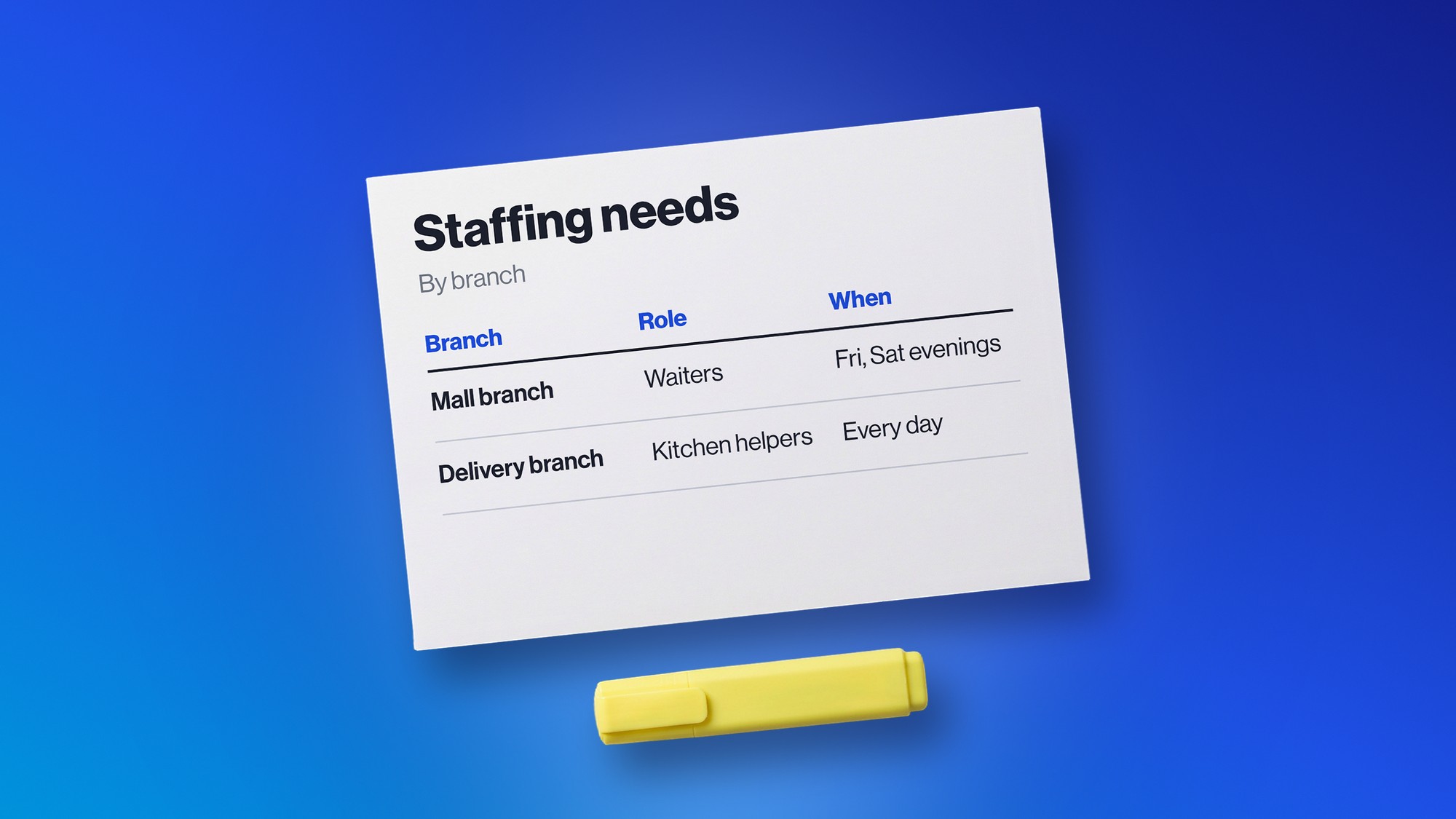
A branch near a shopping district might need extra service staff on weekend evenings. Another might need more kitchen hands simply because its delivery orders run double everyone else’s.
Recruitment should follow what’s actually happening on the ground, not some flat hiring quota handed down the same way to every branch regardless of reality.
Use Multiple Recruitment Channels
People look for work in different places, and sticking to one channel caps how many — and how varied — the applicants end up being.
Spread the search across several channels and the pool widens fast, across different roles and different branches.
Common ones worth running:
- Online recruitment platforms
- Social media
- Employee referrals
- Local community networks
- Recruitment agencies
- Local hiring events
Different channels tend to land different roles, too. An experienced supervisor might turn up through a recruitment platform, while entry-level applicants come in faster through social media or a referral from current staff.
Track where the good hires actually came from. Do that long enough, and the pattern tells you exactly where to put your recruitment budget instead of spreading it thin and hoping.
For businesses running several branches, it helps to sort channels by location too — makes it obvious pretty quickly which sources actually perform where.
Build a Strong Candidate Pool
Multi-location restaurants are rarely not hiring something. Wait until a position turns into an emergency before you start looking, and the branch ends up short-staffed while everyone else scrambles to cover.

A candidate pool heads that off before it happens.
Worth keeping in that pool:
- People who applied for past openings
- Candidates who were solid but just didn’t get the specific role
- Anyone who said they’d be open to something down the line
- Names of current staff recommended
- People who’ve worked with the business before
Keep that information organised, and stick to whatever privacy rules apply when storing it.
Staying loosely in touch with past candidates pays off fast. Need a cashier at a different branch next month? There’s already a shortlist worth a phone call, instead of starting from zero.
Referrals especially earn their keep here — current employees know the actual job and usually know someone who’d fit it.
Make the Hiring Process Faster
An open position doesn’t sit quietly in the background — it shows up in daily operations almost immediately. Leave it open too long, and everyone else ends up covering, which wears on both service quality and morale.
Faster hiring doesn’t mean cutting corners. It means stripping out the delays that were never actually necessary in the first place.
A few things that speed things up:
- Make it clear who owns each part of recruitment
- Review applications on a set schedule, not “whenever”
- Put real timeframes on interviews
- Keep interview questions consistent
- Tell candidates what the role actually involves, upfront
- Share decisions fast, not days later
For businesses running multiple branches, it also helps to split the work — a central HR team handling applications and first-round screening, branch managers taking the final interview.
That split takes a lot of admin off individual managers’ plates while keeping the whole thing moving.
Candidates stay interested a lot longer when communication is clear and prompt. Drag it out, and a strong applicant takes a different job before you’ve even circled back.
Train Managers to Hire Consistently
Branch managers end up carrying a big share of the hiring load. But hand five managers the same candidate and you’ll get five different impressions, because nobody’s running the interview the same way.
Some basic recruitment training fixes a lot of that.
Worth covering in training:
- How to run a structured interview
- Which skills actually matter for each specific role
- How to judge candidates objectively, not off gut feel
- Questions that shouldn’t come up at all
- How to document what happened in the interview
- When something needs to go up to HR or senior management
Managers need to understand both what the restaurant’s actually looking for and the process they’re supposed to follow to find it.
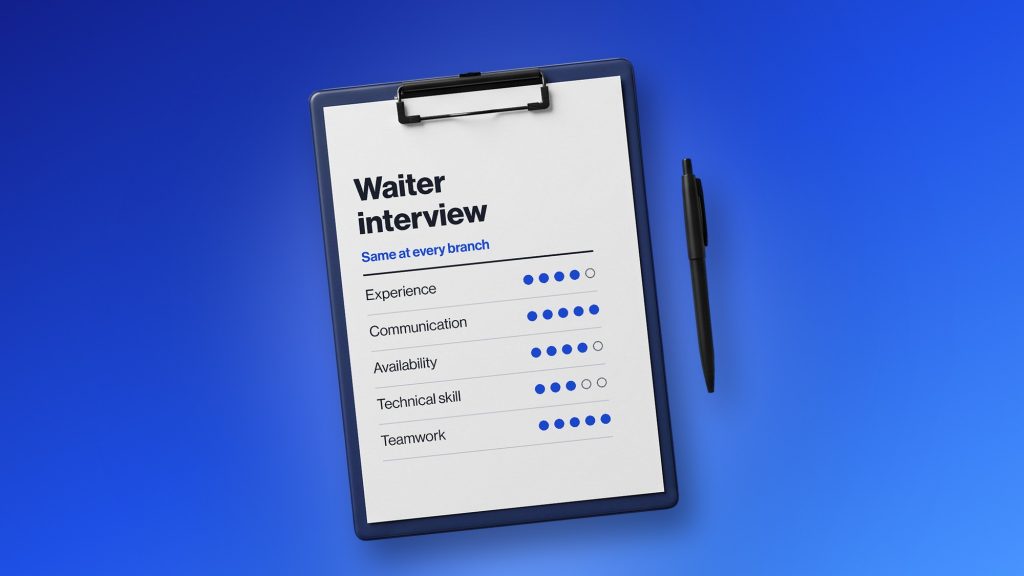
A simple scorecard helps too. Instead of relying purely on personal impression, managers rate candidates against the same handful of things — experience, communication, availability, technical skill, ability to work with others.
That keeps branches on the same page and makes it a lot easier to go back and review a hiring decision later if something doesn’t work out.
Use Technology to Manage Recruitment
Running recruitment across several branches generates a mountain of admin fast — vacancies, applicants, interviews, records, schedules, staffing needs, all multiplied by however many locations you’re managing.
Technology pulls that together and makes the whole thing a lot more manageable.
HR software can organize employee information, handle shifts and attendance, and give real visibility into staffing across every branch at once. That means managers can actually see where the gaps are forming instead of finding out the hard way.
As a restaurant grows, loose spreadsheets and scattered messages stop cutting it. A central system keeps everything in one place and accessible whenever it’s needed.
Bluworks helps businesses manage workforce operations — employee records, shifts, attendance — all in one spot. With that organized, restaurant managers get a much clearer read on staffing across locations and can actually plan instead of reacting.
Technology isn’t a substitute for good recruitment judgment. But it clears out a lot of the admin fog and makes a growing workforce far easier to manage.
Track Recruitment Results
Recruitment isn’t something you set up once and leave alone. It needs regular review, and a few straightforward numbers tell you what’s actually working.
Worth tracking consistently:
- Time to hire — how long a vacancy actually sits open
- Number of applicants — how many people apply per role
- Hiring source — where the good hires actually came from
- Retention — how long new employees stick around
- Vacancies by location — which branches keep struggling to stay staffed
These numbers often surface patterns that don’t jump out day to day.
If one branch consistently takes longer than the rest to fill a role, it’s worth digging in — maybe there’s a genuine local worker shortage, maybe the job description’s off, maybe the hiring process itself is dragging.
Same logic applies to recruitment channels. If hires from one source consistently stick around longer, that’s probably where more budget belongs.
Tracking this turns recruitment from a constant fire drill into something the business can actually refine over time.
Conclusion
Recruiting across multiple restaurant locations means walking a line between consistency and flexibility. Shared hiring standards matter, but so does paying real attention to what each branch actually needs.
Standardized job descriptions, multiple recruitment channels, a ready candidate pool, faster hiring, and well-trained managers all push recruitment in the right direction together. Tracking results shows which of it is actually paying off.
As a restaurant grows, managing the workforce becomes just as critical as finding new people for it in the first place. Organised records, clear shift planning, and real attendance tracking give managers visibility across every branch, not just the one they happen to be standing in.
When recruitment and workforce tools work together, restaurants end up with stronger teams and branches that stay properly staffed.
Frequently Asked Questions
How can restaurants recruit employees for multiple locations?
A mix of online recruitment platforms, employee referrals, social media, local hiring networks, and recruitment events tends to work best. Layer a standard recruitment process on top, and candidates get evaluated consistently no matter which branch is hiring.
What is the best recruitment strategy for restaurant staff?
There isn’t one strategy that fits every restaurant. The strongest approach usually combines clear job descriptions, several recruitment channels, fast communication, structured interviews, and regular tracking of how hires actually turn out.
How can restaurants keep hiring consistent across branches?
Build standard job descriptions, interview questions, evaluation criteria, and hiring steps — then actually train branch managers to follow them. That combination is what keeps hiring standards from drifting from one branch to the next.