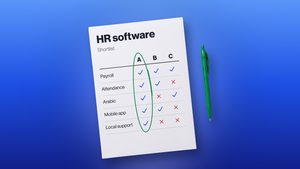
At first glance, a bluworks review might sound like any other HR software discussion, and there’s no shortage of HR software options out there.
Every platform promises to save you time, reduce errors, and make your HR team’s life easier. Most of them were built with a corporate office in mind, a team of salaried employees, fixed working hours, and an IT department to handle the setup.
That’s not the reality for many businesses in Egypt. If you’re managing a workforce spread across multiple locations, running on rotating shifts, with employees who don’t sit in front of a computer all day, you need something different.
This is the gap bluworks was built to fill, and this review will tell you honestly whether it delivers.
A Quick Background on bluworks

bluworks launched in 2022 with a clear focus: workforce management for frontline and shift-based teams in Egypt and the MENA region. It’s not trying to compete with SAP or Oracle. It’s targeting the mid-sized businesses that have outgrown WhatsApp groups and Excel sheets but aren’t ready, or willing to spend six months implementing an enterprise system.
The pitch is simple. Put scheduling, attendance, payroll, and employee records in one mobile-friendly platform, make it work the way Egyptian businesses operate, and keep it practical enough for frontline staff to use.
If you’re wondering whether your company has already hit that tipping point, these signs that your company has outgrown manual HR are worth reading first.
What bluworks Actually Covers
Scheduling
Managers build and adjust shift schedules through the app. When something changes at the last minute, and in shift-heavy operations, something always changes; updates go out immediately without a chain of phone calls.
Attendance Tracking
Employees clock in and out through the mobile app. The data sits in the same system as payroll, which means no more end-of-month exports, manual checks, or “I think Ahmed worked 6 overtime hours but I’m not sure” conversations.
Leave Management
Requests go through the app, managers approve or reject with context, and balances update on their own. It removes a surprising amount of back and forth that most HR teams don’t realize is eating their time until it stops.
Payroll Automation
bluworks calculates payroll from actual attendance data, overtime, deductions, penalties, and incentives, all factored in. It’s built around Egyptian labor regulations, which matters more than most global platforms seem to realize. For a detailed breakdown of how this works locally, the step-by-step guide to the Egyptian payroll process covers exactly what’s involved.
Incentives and Penalties
This one’s worth mentioning separately because a lot of platforms don’t handle it cleanly. bluworks lets you configure variable pay components and link them directly to the payroll run, rather than calculating them separately and hoping the numbers match.
Employee Digital Files
Contracts, documents, and personal records are all stored digitally and searchable. If your HR team is still managing physical folders or scattered Google Drive links, this alone is worth the switch.
bluworks Review: Where It Performs Well
The mobile experience is genuinely strong. A lot of HR platforms technically have a mobile app, but they clearly built it as an afterthought; the layout doesn’t translate, features are missing, and frontline staff give up on it within a week. bluworks is built mobile-first, and you can tell. Adoption among floor-level and field staff tends to be higher because the app is actually usable.
The local compliance angle is underrated. Egyptian payroll has specific requirements around taxes, social insurance, and labor law that global platforms handle poorly, if at all. bluworks is built around these from the ground up, which removes a significant risk for businesses that have been handling it manually or relying on one person who “knows how it works.”
The integration between attendance and payroll is probably the feature that saves the most real time. Once you’ve used a system where clocking in automatically feeds into payroll calculations, going back to manual reconciliation feels absurd. This also directly improves the HR metrics that matter most, accurate data in means accurate reporting out.
And the implementation speed matters more than it sounds. Plenty of companies buy HR software and spend three to six months in setup before seeing any value. bluworks is designed to get operational faster, which means the ROI conversation starts earlier.
Where It Falls Short
bluworks isn’t a fit for every company, and it’s worth being honest about that.
If your workforce is mostly office-based with standard hours, the platform’s core strengths become less relevant. It was designed around the complexity of shift work and distributed teams; a traditional office environment doesn’t really need most of what makes bluworks useful.
There’s no live GPS or location tracking. For some industries, this isn’t an issue. For others, delivery operations, field service teams, roles where you need to verify someone is physically where they’re supposed to be, it’s a real gap.
It also doesn’t cover the full HR lifecycle. Recruitment, performance reviews, learning and development, these aren’t part of the platform. bluworks solves operational HR, not strategic HR. For some businesses, that’s exactly what they need. For others, they’ll need additional tools alongside it.
Who Should Use bluworks
The businesses that get the most out of bluworks tend to look like this: retail chains, logistics companies, facilities management operations, food and beverage businesses, factories, or any organization with a large hourly workforce across multiple sites.
Companies in Egypt that are still running payroll and attendance on spreadsheets, or worse, paper, and have reached the point where the errors and time lost are genuinely hurting operations. If you’re not sure which category your business falls into, understanding what HR roles and responsibilities should actually look like at your stage of growth can help clarify the decision.
It’s also a strong option for companies that have tried a larger, more complex HR platform and found that adoption collapsed because it was too complicated for their teams to use day to day.
Who Might Need to Look Elsewhere
If your team is primarily office-based with standard working hours, or if you need deep performance management, recruitment pipelines, or live GPS tracking as core requirements, bluworks may not cover everything on your list. In those cases, a broader HR suite or a combination of tools might serve you better.
The Pricing Plans
bluworks doesn’t publish a fixed pricing page, which is fairly standard for this type of platform. What you pay depends on your headcount and which product and features you need. The best way to get a real number is to go through the demo process.
For most businesses in that situation, consolidating into one platform works out cheaper than the fragmented setup, especially once you factor in the hours saved on manual work. When you’re comparing costs, think about what you’re currently spending across separate tools for time tracking, payroll, and record management combined.
Conclusion: The Honest Verdict
bluworks is a well-built platform for a specific type of business. It doesn’t try to solve every HR problem, and that’s actually what makes it good at the ones it does solve. If you’re managing shift workers, dealing with attendance headaches, struggling with payroll accuracy, or operating across multiple locations in Egypt or the region, it’s a strong option and one of the few built locally with local compliance in mind.
If you’re a mostly office-based company looking for a full-cycle HR platform with recruitment and performance management, it’s probably not the right fit on its own.
But for the businesses it was built for, the combination of mobile usability, attendance-to-payroll automation, and local compliance support is hard to match with a global platform that treats Egypt as an afterthought.
To understand how this feeds into better business decisions overall, it’s worth looking at how HR data can drive better business decisions at the operational level.
Frequently Asked Questions
Is bluworks suitable for small businesses?
It depends on the type, not just the size. A small business with 30 shift workers will get real value from it. A small office-based team with fixed hours probably won’t need most of what it offers.
Does bluworks support Arabic?
Yes, Arabic language support is built into the platform, not added on. That matters for adoption among employees who aren’t comfortable navigating an English-only interface.
Is bluworks compliant with Egyptian labor law?
Yes. Payroll calculations are built around Egyptian tax and labor regulations, including social insurance. This is one of the clearest advantages over international platforms.
How quickly can a company get up and running?
Faster than most enterprise alternatives. The focus on practical, operational features means there’s less configuration required before the system becomes useful.
Can frontline employees use it without much training?
Generally yes. The mobile-first design means most employees can figure out clock-in, leave requests, and pay slip access without a training session.