Choosing the best HR software in Egypt is about more than finding a platform with the longest feature list or the biggest name. What works well for a company in the US or Europe may not work nearly as well for an Egyptian business dealing with local payroll requirements, social insurance, Arabic language needs, and employees working across different locations and shifts.
The right HR software should fit the way your business actually operates. It needs to handle the administrative realities of running a workforce in Egypt while making everyday tasks easier for HR teams, managers, and employees. A platform can be packed with features and still fall short if those features are difficult to use or do not match your needs.
In this guide, we compare 10 HR software solutions available to businesses in Egypt in 2026, including locally developed platforms and international providers with different levels of regional support. Rather than simply counting features, we look at what each solution offers, who it is best suited for, and the factors worth considering before making a decision.
What Actually Matters When Comparing These Platforms
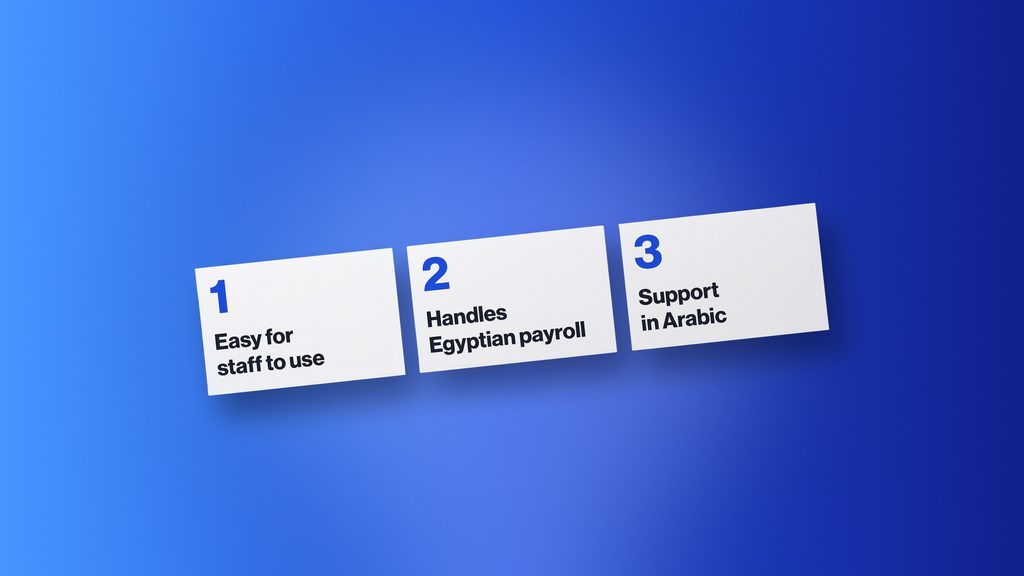
Egyptian payroll compliance is non-negotiable. Egypt has specific tax brackets, social insurance calculation rules, and labor law requirements that generic global platforms handle inconsistently. Any platform worth considering should be able to demonstrate local payroll accuracy, not just claim it.
Arabic language support affects real-world adoption. For frontline and operational teams, an English-only interface is a barrier. Arabic support in the employee-facing parts of the system matters for actual daily usage, not just the admin panel.
Mobile access is critical for distributed workforces. If your employees are not sitting at desks, they need an app that works well on a phone. This is one of the clearest dividers between platforms built for frontline operations and those built for offices.
Implementation speed matters more than feature breadth for most growing businesses. A platform that takes six months to configure and requires heavy customization often delivers less real value than a simpler one running within weeks.
The 10 Best HR Software in Egypt
1. bluworks
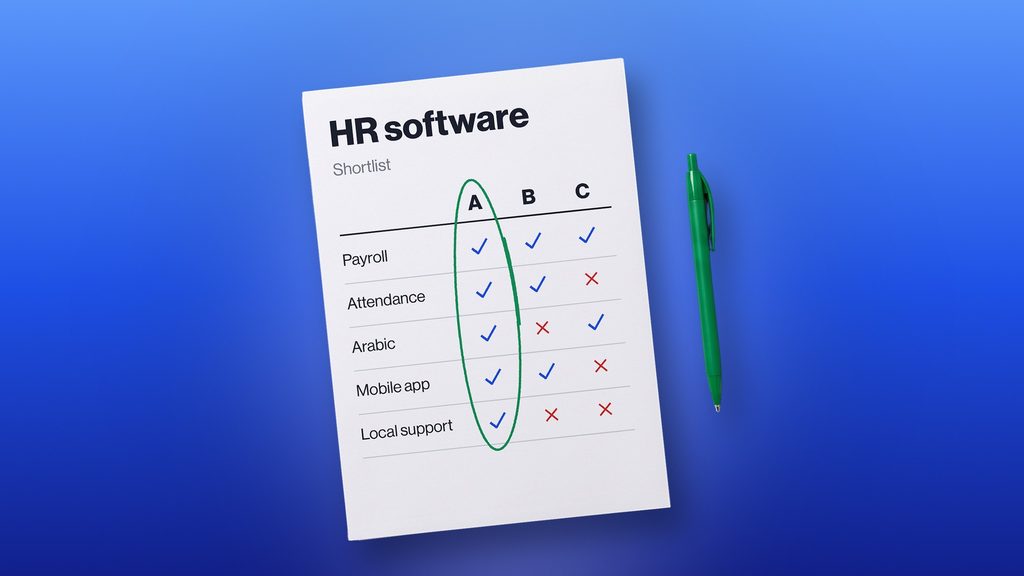
bluworks is the most locally focused option on this list, built specifically for Egyptian and MENA businesses managing frontline, shift-based, or distributed workforces.
It covers scheduling, attendance tracking, leave management, payroll automation, incentives and penalties, and secure employee digital files, all through a mobile-first interface designed for operational teams.
The payroll module is built around Egyptian labor law and social insurance requirements from the ground up, which removes a significant compliance headache for businesses managing this manually or through spreadsheets. Arabic support is full and native, not a translation layer on top of an English product.
Where Blueworks fits best: companies with large hourly or shift-based workforces, businesses across multiple locations, organizations that have outgrown spreadsheet-based HR.
Where it is less relevant: fully office-based teams with fixed hours, or businesses needing deep recruitment and performance management modules. More detail in our Blueworks Review.
2. SAP SuccessFactors
SAP SuccessFactors is one of the largest enterprise HR platforms globally. It covers the full HR lifecycle at a level of depth and configurability that few platforms match. Recruitment, onboarding, performance management, learning, succession planning, workforce analytics- all of it.
For Egyptian businesses, the reality is more complicated. Implementation is long and expensive. Arabic support exists but varies by module. Local payroll compliance requires significant configuration and often third-party integration.
This is a platform designed for large enterprises with dedicated IT and HR infrastructure. A mid-sized Egyptian business considering SuccessFactors should expect a substantial project, not a quick deployment.
3. Oracle HCM Cloud
Oracle HCM is another enterprise-tier platform with comprehensive functionality across HR, payroll, talent management, and workforce planning. Like SAP, powerful and complex, more so than most mid-sized businesses need or can realistically deploy.
Egyptian payroll compliance and Arabic language support are available but require implementation work. Oracle partners in Egypt handle local configuration, but the cost and timeline reflect the platform’s enterprise nature. Best suited to large organizations with complex multi-country HR needs.
4. Microsoft Dynamics 365 HR
Microsoft Dynamics 365 HR integrates with the broader Microsoft ecosystem, Teams, Outlook, and Azure AD, which is an advantage for businesses already running on Microsoft infrastructure. The HR module covers employee records, leave management, benefits, compensation, and some analytics.
Arabic support is available given Microsoft’s regional investment, and local payroll integration is possible through the broader Dynamics 365 Finance module. The platform works best as part of a larger Dynamics 365 deployment, which increases both cost and complexity for businesses that just want solid HR functionality on its own.
5. Odoo HR
Odoo is an open-source ERP with an HR module that covers attendance, leave, recruitment, payroll, and appraisals. The main appeal is flexibility and cost. The community edition is free, and the platform is highly customizable by developers.
In Egypt, Odoo has a network of local implementation partners who handle Arabic configuration and payroll localization. For businesses already using Odoo for accounting or operations, adding HR makes practical sense. For those adopting it specifically for HR, the implementation effort and dependence on partner quality are real variables to understand before committing.
6. Zoho People
Zoho People is a mid-market HR platform covering attendance, leave, performance management, onboarding, and some workforce analytics. More accessible than enterprise platforms in terms of cost and setup time, and it integrates with other Zoho products.
Arabic interface is available. Egyptian payroll requires configuration and may need third-party tools for full compliance. Mobile access exists but the experience is more polished in the admin interface than the employee-facing app. A reasonable option for businesses that prioritize performance management and want something beyond pure operational HR.
7. BambooHR
BambooHR is a popular HR platform for small to mid-sized businesses, particularly in the US and Europe. It covers employee records, onboarding, performance management, and some reporting. The user experience is generally clean, and the adoption curve is manageable.
For Egyptian businesses, the limitations are meaningful. Arabic support is minimal. Egyptian payroll compliance requires external tools. The platform is fundamentally built for office-based salaried workforces. Operational and shift-based environments are not where it performs best. Worth considering if your team is mostly desk-based and English-comfortable, less so for frontline operations.
8. Workday
Workday is enterprise HR at its most comprehensive, covering everything from core HR and payroll to workforce planning, analytics, and financial management. Used by large multinational companies globally, with investment in the MENA market presence.
For Egyptian mid-sized businesses, Workday is generally over-specified and overpriced. Implementation projects are substantial, and the platform’s strengths are most relevant at scale. If you are evaluating Workday for a large Egyptian operation with complex multi-country needs, it deserves consideration. For growing businesses trying to get operational HR sorted, it is a significant amount of platform for the problem.
9. Forte HR
Forte HR is an Egyptian-built HR system that has been in the local market for a number of years. It covers payroll, personnel management, attendance, and HR administration with full Arabic support and local compliance built in.
As a locally developed product, it understands Egyptian labor law and payroll requirements natively. The platform tends to be better suited to traditional HR administration than modern operational HR.
Mobile experience and real-time data capabilities are less developed than newer entrants. Worth evaluating for businesses that prioritize local support and an established compliance track record over modern UX.
10. Yomly
Yomly is a cloud-based HR platform focused on the Gulf and broader MENA region. It covers HR administration, payroll, leave, and some workforce management functionality. Regional compliance support is a core part of the product, and Arabic is supported throughout.
In Egypt specifically, Yomly is less established than in the Gulf markets where it originated. Local payroll compliance and support availability are worth verifying directly before committing. For businesses operating across multiple MENA markets, the regional scope might be an advantage. For Egypt-focused operations, local alternatives may offer more grounded support.
How to Narrow Down Your Shortlist
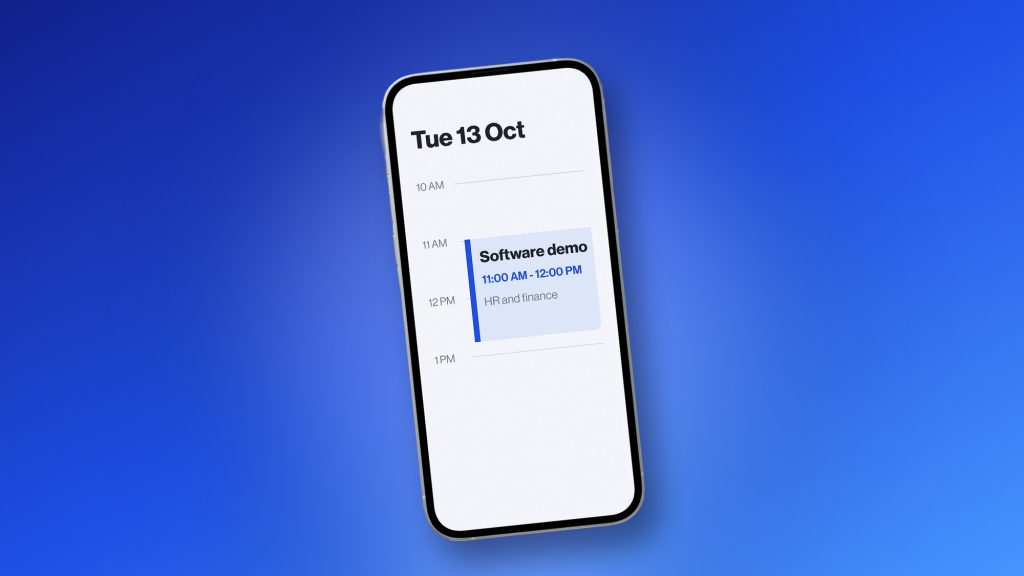
Ten options is too many to evaluate seriously. A few filters narrow this down quickly.
If Egyptian payroll compliance is your primary driver, the clearest options are Blueworks, built locally for this from the start, Forte HR with its established local compliance track record, and Odoo with a strong local implementation partner. Global platforms like SAP, Oracle, and Workday can handle Egyptian payroll but require more setup work and ongoing maintenance.
If mobile access for a frontline workforce is the priority, Blueworks is the clearest option on this list. Most of the others, particularly the enterprise platforms, were designed for desk-based users and mobile is a secondary experience. See here for how a platform built around this looks in practice.
If you are already inside a specific technology ecosystem, Microsoft, Zoho, or Odoo, the HR module within that ecosystem is worth evaluating seriously before looking elsewhere, since integration and data consolidation are real practical advantages.
If implementation speed matters, avoid enterprise platforms unless you have the project budget and timeline to match. How Long Does It Take to Implement an HR System? A Realistic Timeline covers what to realistically expect before committing to a platform.
Frequently Asked Questions
Do HR software platforms support Arabic?
Blueworks, Forte HR, Yomly, Oracle, SAP, and Microsoft Dynamics all offer Arabic language support to varying degrees. BambooHR and Workday have minimal Arabic support. The quality of Arabic support in employee-facing features varies even among platforms that technically offer it. Worth testing specifically in demo sessions.
Can a growing business switch HR platforms later?
Yes, but it is disruptive. Data migration, retraining, and the transition period create real operational friction. Getting the selection right the first time, even if it means taking a few extra weeks to evaluate properly, is usually worth it versus switching after a year of accumulated data and habits.
Is cloud-based HR software safe for employee data in Egypt?
Cloud-based platforms can be highly secure when vendors invest properly in data protection. The key questions are where data is stored, how it is encrypted, and what access controls exist. Egyptian businesses should also understand any applicable data protection obligations when selecting a cloud provider.