A candidate says yes to an offer, and it’s tempting to treat that as the finish line. Position filled, hiring team moves on, manager starts planning around the new hire.
Except there’s still a stretch of real work ahead: actually getting that person ready to start.
What happens between an accepted offer and someone actually settling into the role shapes how they see the business from the start. Communication goes quiet, expectations stay vague, the first day’s a mess, and suddenly a candidate who seemed solid starts having second thoughts about joining at all. Even when they do show up, walking in unprepared makes it that much harder to adjust and actually perform.
This matters more for businesses running shift-based or operational teams. A new hire might need to slot into a specific shift, report to a particular location, get through training, or learn procedures before they can even start their actual responsibilities.
Recruitment isn’t just finding and picking the right person. It’s also getting that person ready to actually become part of the team.
What Happens After a Candidate Accepts the Offer?
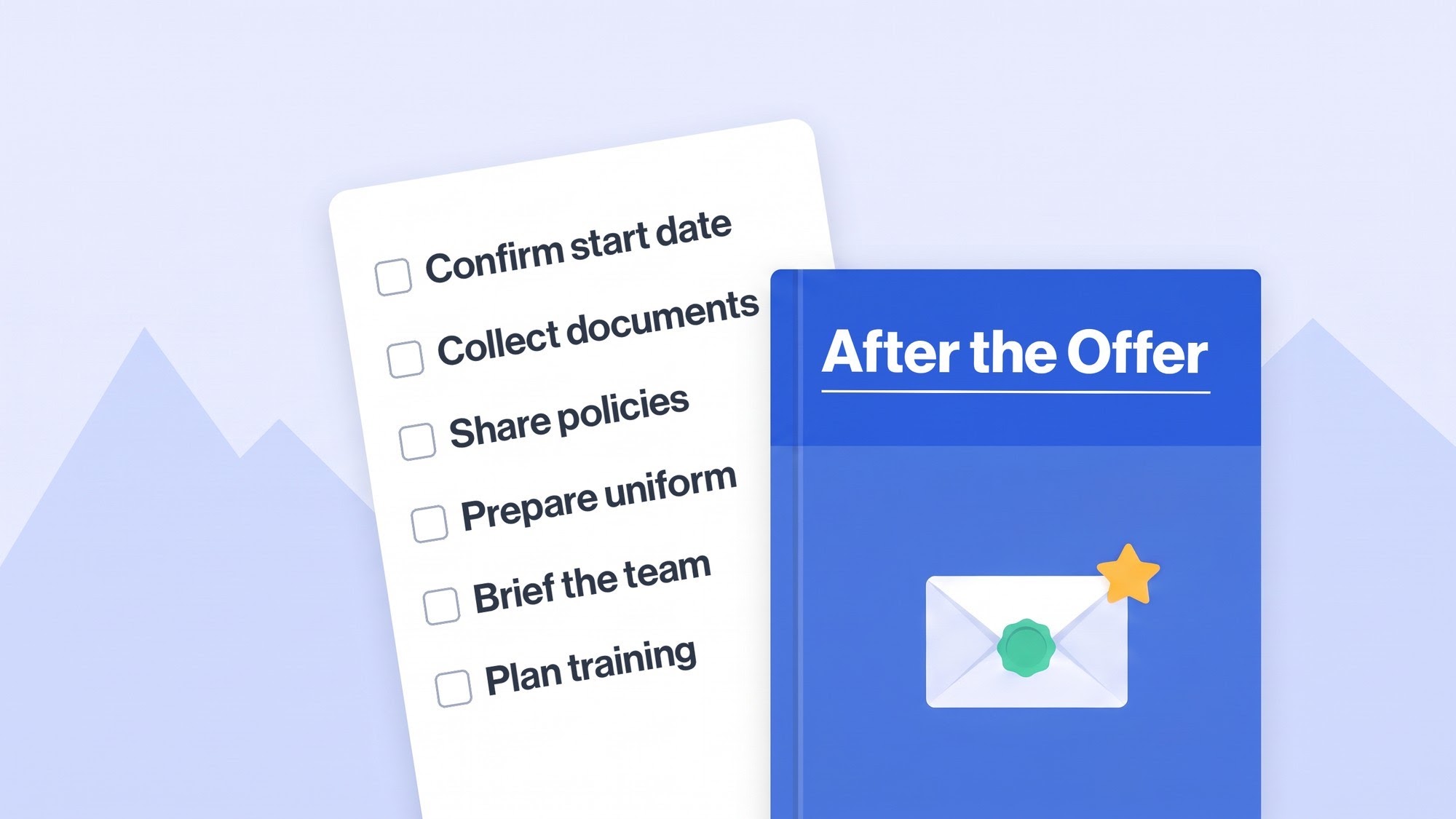
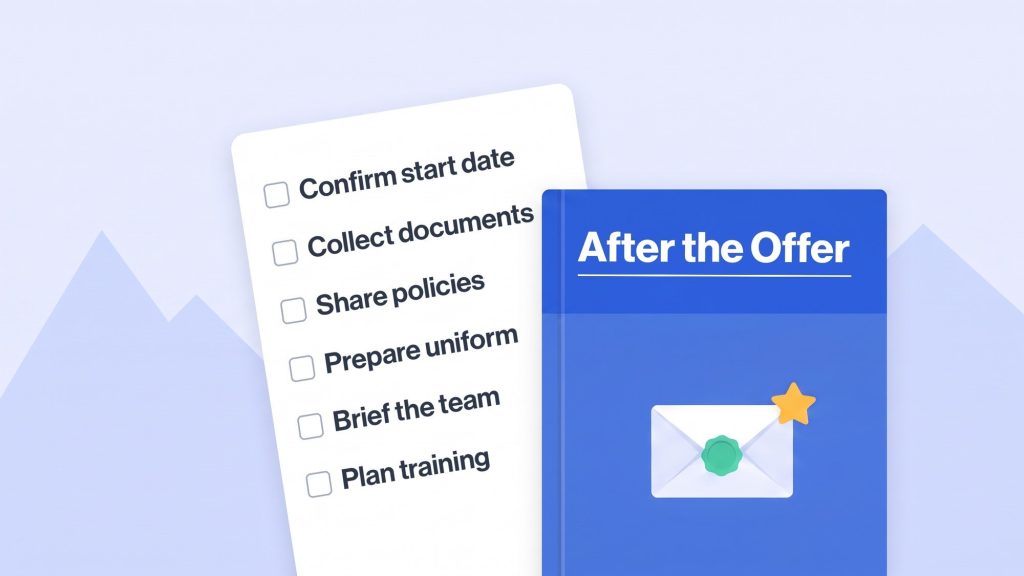
Once someone says yes, the business shifts from hiring mode into preparation mode. That usually covers:
- Confirming the employee’s start date, work location, and schedule.
- Collecting the required documents and employee information.
- Sharing workplace policies and important instructions.
- Preparing tools, equipment, uniforms, or system access.
- Informing the employee’s manager and team about the new hire.
- Planning initial training and onboarding activities.
What exactly needs doing depends on the role. An office hire might just need system access set up. A warehouse hire needs safety training and a real understanding of their shift pattern before day one.
None of this looks complicated individually, but it usually touches several different people. HR’s handling documents, the manager’s sorting the schedule, and someone else owns training. Without a clear process tying it together, things fall through the cracks.
Why the Post-Offer Stage Matters
Candidates May Still Change Their Minds
Accepting an offer doesn’t mean someone’s fully locked in. They could still be weighing other options, waiting on details about the role, or dealing with something that’s shifted on their end.
A long silence after the offer just makes that uncertainty worse. No word on a start date, no sense of what to prepare, no idea who to even ask, and doubt starts creeping in.
Staying in touch cuts that risk down. A short message confirming the start date, outlining next steps, or just checking if they have questions goes a long way toward keeping them engaged.
It doesn’t need to be constant contact. Just clear, and timely.
The First Day Shapes the Employee Experience
The first day gives a new hire their earliest real read on how the business actually runs. They show up, nobody seems to know they’re starting, the manager’s unavailable, and they’re not sure where to even go. That’s a confusing, discouraging start.
A prepared first day flips that entirely. It makes people feel genuinely welcomed and gives them a real sense of what’s ahead.
It’s not just about the good impression either. A prepared employee starts work with fewer delays. Schedules are set, reporting instructions are clear, training’s planned out, so they can actually focus on learning the role instead of chasing down basic logistics.
Unclear Expectations Can Lead to Early Turnover
Sometimes a new hire figures out pretty quickly that the job isn’t what they signed up for. The hours were different than they thought, the responsibilities were vague, or something about the role never got explained properly.
That frustration sets in fast. For shift-based roles especially, things like weekend coverage, rotating schedules, attendance rules, and location all matter a lot here.
Getting these expectations nailed down during recruitment and confirmed again before the start date puts the employee and the manager on the same page from the beginning, instead of discovering a mismatch a week in.
Poor Preparation Can Affect Daily Operations
An unprepared new hire doesn’t just create a rough day for that one person. A manager’s reshuffling shifts, someone else is covering the gap, and the whole team is spending time explaining things that should’ve already been sorted.
For any business running on tight daily staffing, these disruptions hit service, productivity, and the rest of the team’s workload directly.
Preparing properly ahead of time avoids most of this. The employee should know exactly when and where to show up. The manager should know exactly what their own role is in welcoming and training them.
Common Mistakes Businesses Make After the Offer
Stopping Communication
One of the most common mistakes: treating the accepted offer as the last real point of contact before day one.
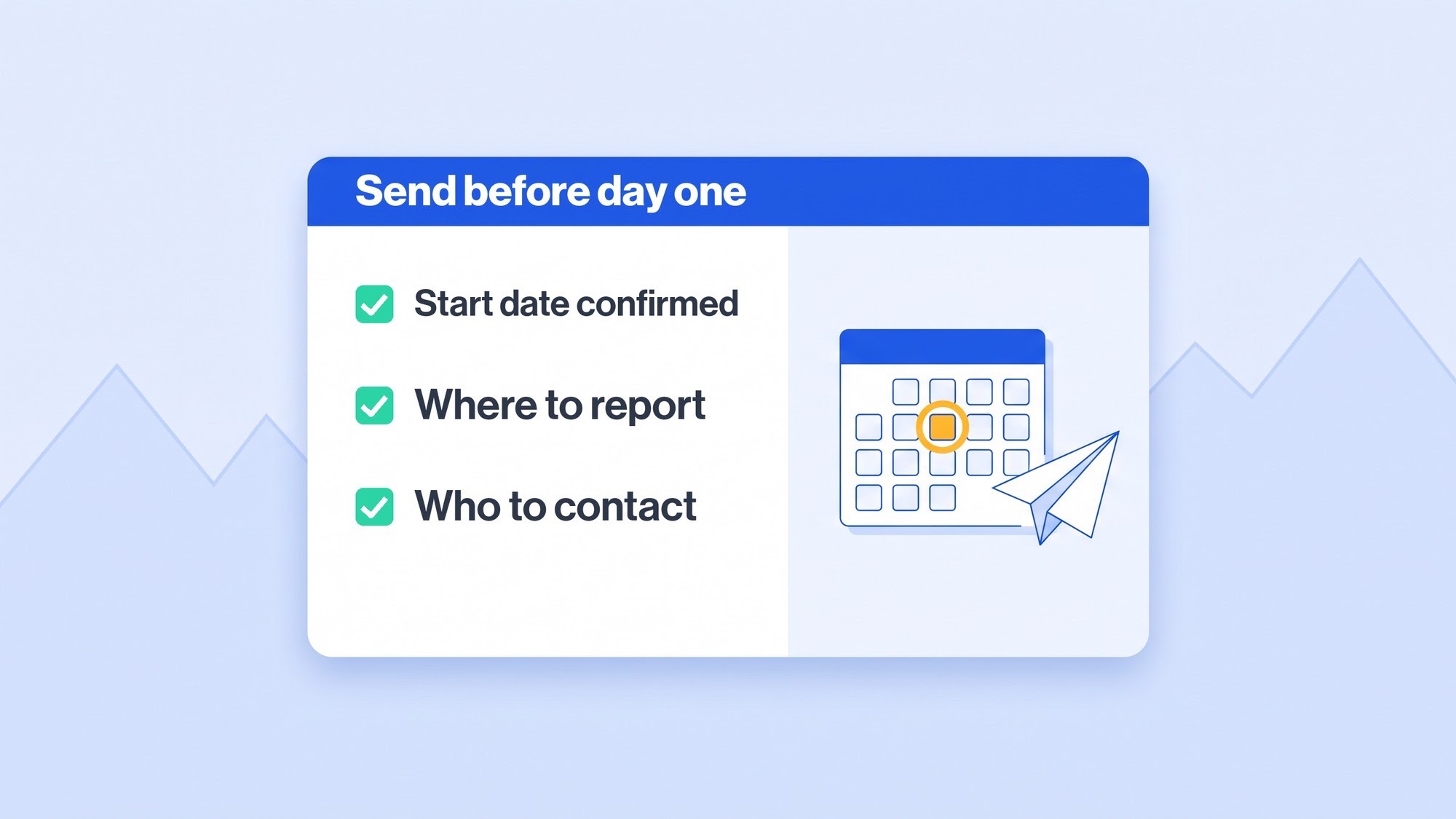
The new hire’s left waiting on information about documents, schedule, procedures, maybe even unsure if the start date’s actually locked in.
A simple communication plan fixes this. Confirm right after the offer’s accepted, share whatever instructions are needed, follow up again right before the start date, and make sure they know exactly who to reach if a question comes up.
Treating Onboarding as a Paperwork Task
Getting forms filled out and information collected matters, sure, but it’s not the whole job.
New employees need to actually understand the role, meet the people they’ll be working alongside, and get a sense of how the business runs day to day. Onboarding that stops at paperwork leaves someone technically processed but not actually ready for the work itself.
The better version blends the administrative side with real, practical guidance, covering both the formal requirements of the job and what the day-to-day actually looks like.
Not Preparing Managers or Teams
HR knows someone new is starting. The direct manager or team, not always.
That leads straight to an awkward first day, unclear ownership of training, and a new hire with nobody really there to support them right when they need it most. It also dumps extra pressure on whoever’s scrambling to pull everything together last minute.
Before the start date, managers need the details in hand: the role, the schedule, reporting instructions, and whatever onboarding pieces fall to them specifically.
Providing Too Much Information at Once
New hires do need information, but dumping all of it on day one is overwhelming. A giant list of policies, systems, and procedures just doesn’t stick when it’s delivered in one sitting.
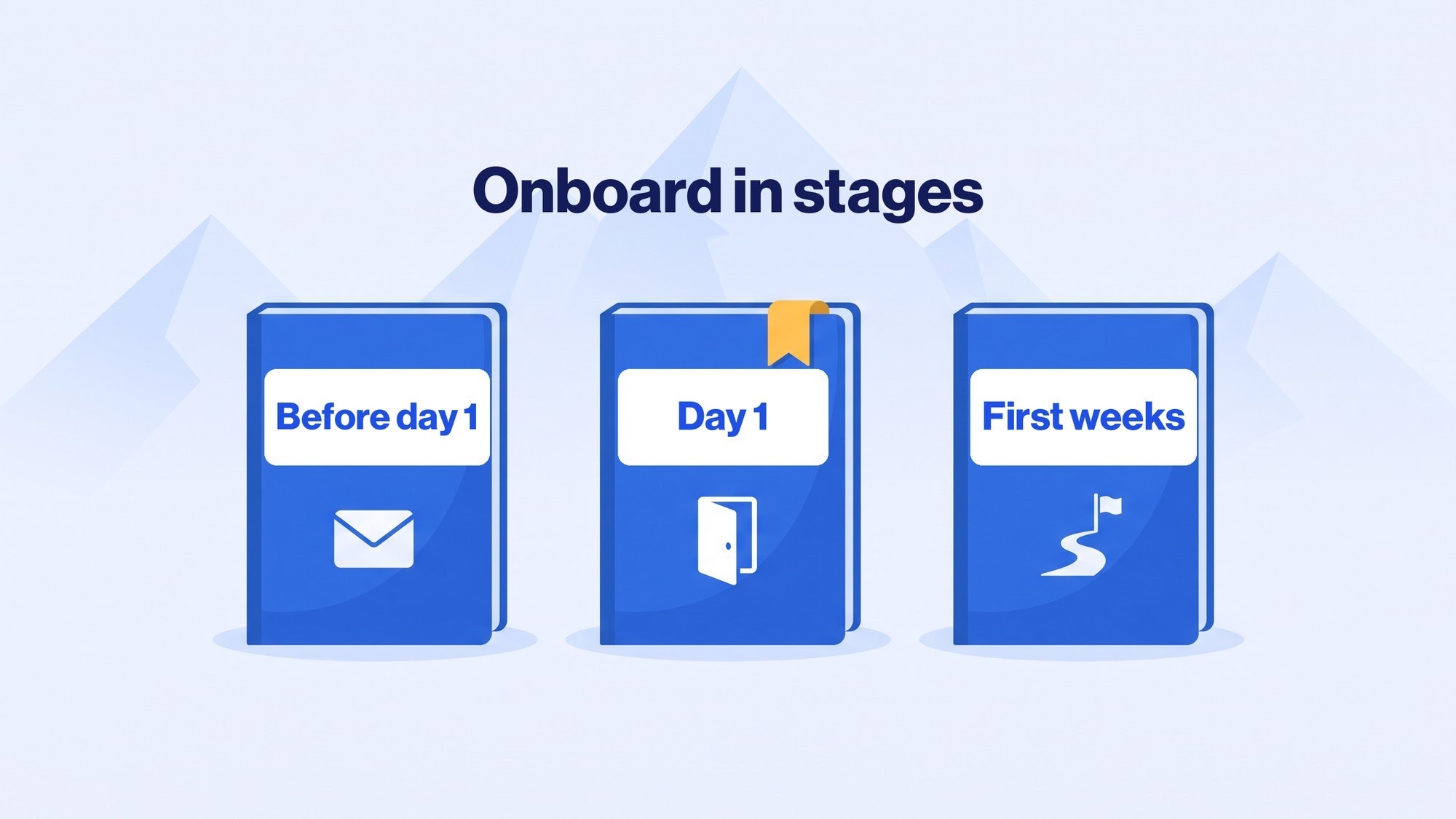
Splitting onboarding into stages works better. Cover the essentials before they start, handle the most important pieces on day one, and introduce the finer details over the following weeks.
That gives people actual time to absorb what matters and ask questions along the way, instead of nodding along to a firehose of information they’ll forget by lunch.
How to Build a Better Post-Offer Process
A structured process doesn’t need to be complicated. A handful of practical steps make a real difference in the transition from accepted offer to first shift.
- Confirm the offer and start date. Make sure the employee’s clear on the position, hours, location, and confirmed start date. If anything changes, say so right away.
- Keep communication open. Share updates on next steps, send reminders when needed. Nobody should be guessing whether they need documents in hand, a specific arrival time, or a particular contact.
- Prepare employee documents. Collect and organize what’s required before the employee even arrives. Cuts down on admin delays and gives HR a real sense of where things stand.
- Create a first-day checklist. Where to report, who to meet, what to bring, whether a uniform or equipment’s needed. For operational roles, make sure shift and attendance procedures are clear too.
- Prepare the manager and team. Confirm who’s welcoming the employee, who’s walking them through responsibilities, who’s handling initial training. The new hire should know exactly who to go to for support.
- Plan role-specific onboarding. Training should actually match the work. A retail hire needs store procedures and customer service basics. A warehouse hire needs safety rules and equipment guidelines.
- Check in during the first few weeks. The process doesn’t stop after day one. A quick check-in helps managers gauge whether someone’s actually settling in, has questions, or needs more support.
How HR Software Supports the Post-Offer Process
Managing everything after an offer’s accepted gets messy fast once information’s scattered across emails, spreadsheets, paper forms, and half a dozen separate systems. HR ends up chasing managers, checking documents, double-checking whether someone’s actually ready to start.
HR software pulls all of this into one place.
Employee records make organizing new hire details simple. Onboarding tools let HR track what’s required and keep tabs on readiness ahead of the start date. Attendance management starts logging from day one. Shift management gives managers real visibility into schedules and staffing needs.
All of these pieces connect. An employee’s information, schedule, attendance, and onboarding progress together tell the business whether someone’s genuinely ready to begin.
Bluworks supports businesses across these core HR activities: employee records, onboarding, attendance, and shift-related processes.
For operational teams especially, having this information easy to reach cuts down on manual follow-up and helps HR and managers actually coordinate instead of chasing each other down.
None of this replaces human communication. It just keeps the information and tasks behind that communication organized and manageable.
Conclusion
A candidate accepting an offer is a real milestone, but it’s not the finish line. There’s still real communication, real preparation, and real support needed to get that person into their new role properly.
A well-run post-offer process cuts down on uncertainty, gets managers and teams actually ready, and gives new hires a start that feels organized rather than chaotic. It also helps businesses sidestep staffing disruptions and catch problems early, before they turn into someone quitting a few weeks in.
Treat onboarding as part of recruitment, not something separate, and the whole transition from hiring to the first day and beyond gets smoother.
Tools like Bluworks help keep the HR side of this organized, giving teams real visibility into employee information, attendance, and scheduling as new hires come on board.
Frequently Asked Questions
What happens after a candidate accepts a job offer?
The candidate and business confirm the start date and work details. The business typically collects employee documents, prepares the workplace, informs the manager and team, and starts planning onboarding and training.
Why is onboarding important after a job offer is accepted?
It helps employees understand their role, what’s expected of them, and their daily responsibilities. It also helps the business get the employee properly ready to work, giving new hires a clearer, more organized start.
How can businesses reduce the risk of a new employee not showing up?
Confirm the start date, keep communication flowing, send reminders, and make clear what to expect before day one. Making sure the candidate knows who to contact also helps catch questions or concerns before they become a reason to walk away.